
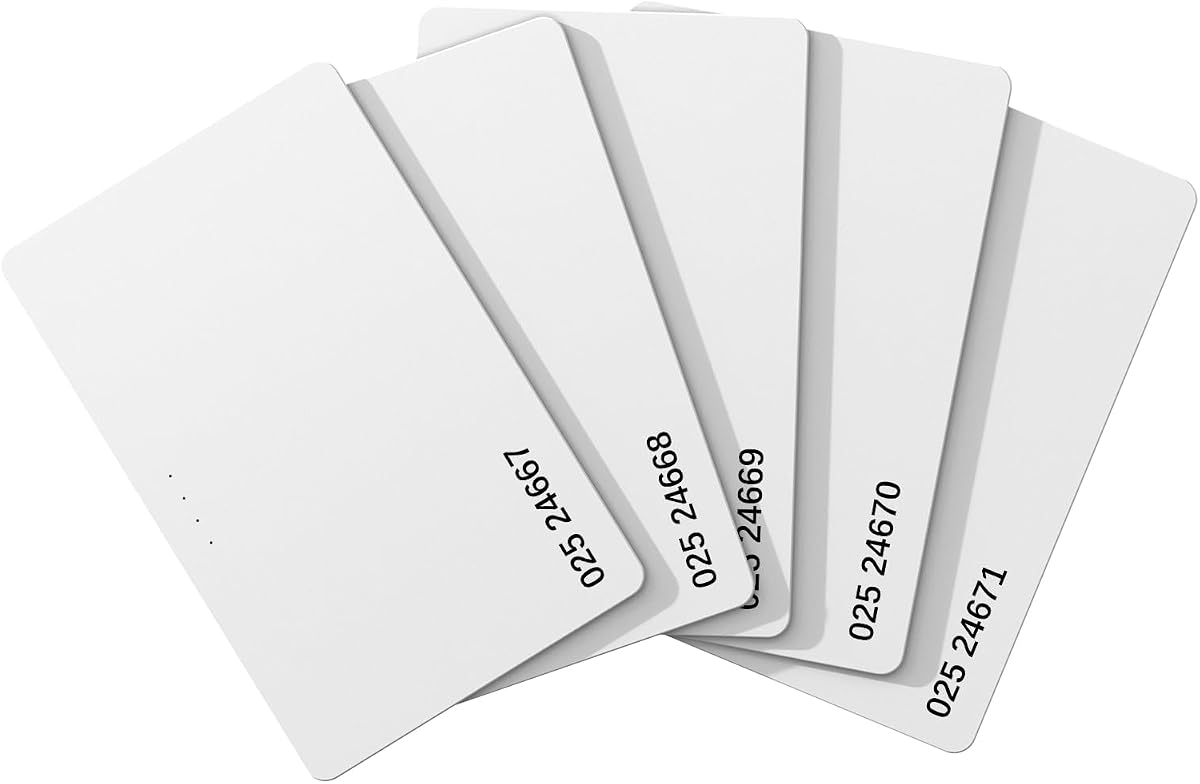
10Pcs T5577 Writable RFID Cards
5.0Editor score
125kHz frequency
White PVC material
Hotel key compatible
This guide compares the best blank rewritable RFID cards for access control and NFC projects, evaluating frequency compatibility and rewrite durability.
Blank rewritable RFID cards offer a versatile solution for access control, membership tracking, and NFC automation projects. These smart cards can be programmed multiple times, allowing users to update data without replacing the physical card. Choosing the right card depends on frequency compatibility, chip type, and intended application.
We have analyzed ten top-rated products to help you find the ideal card for your needs. Our comparison covers both high-frequency MIFARE cards and low-frequency T5577 options. Each product was evaluated based on specifications, user ratings, and compatibility with common readers and writers.
Each pick highlights key features, pros, and cons to streamline your decision-making process. Prices and availability change frequently, so verify current details before purchasing. Use this guide to select a card that matches your system requirements and budget constraints effectively.
5.0Editor score

4.2Editor score

4.6Editor score
The following table provides a side-by-side comparison of all ten products analyzed in this guide. It highlights critical specifications such as frequency, chip type, and pack size to help you quickly identify the right match for your RFID system.




The LEXI 20pcs Rewritable UID Smart Card stands out as a top choice for those needing flexible access control solutions. With a strong 4.2 rating, users appreciate its ability to be reprogrammed repeatedly without degradation. The card operates at 13.56MHz, ensuring broad compatibility with modern RFID readers and door systems.
We may earn a commission when you buy through this link, at no additional cost to you.
Its standout feature is the unlocked Block 0 Sector, which allows the UID to be changed. This is crucial for cloning legitimate access cards for personal or authorized business use. The card supports over 100,000 rewrite times, ensuring longevity even with frequent updates. The PVC construction is durable and fits standard card sleeves perfectly.
While the card is versatile, it requires a writer capable of handling MIFARE Classic 1K chips. Some users may find the setup process technical if they are new to RFID cloning. Additionally, the 1K memory limit restricts advanced data storage compared to larger memory cards. These trade-offs are acceptable for standard access control needs.
This product is ideal for technicians, small business owners, or hobbyists who need reliable rewritable cards. If your system relies on 13.56MHz MIFARE protocols, this card offers the right balance of performance and affordability. We recommend it for users seeking a dependable tool for cloning and customization tasks.
The ability to rewrite the Unique ID in Sector 0 makes these cards essential for duplicating access credentials securely.
With over 100,000 rewrite cycles, these cards are built to withstand frequent reprogramming in high-use environments.
We may earn a commission when you buy through this link, at no additional cost to you.
The 30 Pack NTAG Ultralight EV1 NFC Cards offer advanced capabilities for modern NFC projects. Rated 4.1 by users, these cards come with robust security mechanisms like OTP and password protection. They operate at 13.56MHz, making them compatible with smartphones and modern readers alike. The matte surface supports thermal printing for custom logos.
We may earn a commission when you buy through this link, at no additional cost to you.
These cards are particularly strong for event admissions and temporary visitor authorization. The EV1 chip allows for up to 100,000 write cycles and ten-year data retention. Users can lock specific pages to prevent unauthorized changes, ensuring data integrity over time. The waterproof and scratch-resistant PVC material ensures durability in busy environments.
However, these cards come factory locked and require an unlock command via NFC Tools before full use. This extra step might confuse beginners expecting plug-and-play functionality. Additionally, the 48-byte memory is quite limited compared to MIFARE 1K cards. For simple links or IDs, this is sufficient, but complex data needs may require a different chip.
Ideal for event organizers or businesses creating branded NFC badges, these cards provide a professional look. The ability to print directly on the surface using thermal printers adds significant value. If you need secure, customizable NFC tags for short-term use, this pack is a solid investment.
Built-in features like OTP and configurable passwords protect stored information from unauthorized access or tampering.
The matte uncoated surface supports thermal sublimation printing for high-quality logos and personalized text.
We may earn a commission when you buy through this link, at no additional cost to you.
The YARONGTECH-125khz writable rewrite blank white T5577 card is a trusted option for low-frequency access needs. With a 4.5 rating, users confirm its reliability for hotel key systems and basic access control. It uses the T5577 chip, which is widely supported by 125kHz writers and copiers. The white blank surface is ready for printing.
We may earn a commission when you buy through this link, at no additional cost to you.
These cards are designed to replicate standard 125kHz ID formats including H ID WG. They must be programmed before use since they do not have pre-set IDs. This flexibility allows them to replace damaged cards in existing systems easily. The 20-pack size offers a convenient supply for small businesses or households.
The main limitation is the reliance on older 125kHz technology, which lacks the security of modern high-frequency chips. Users must ensure their readers support this frequency before purchase. Additionally, the lack of pre-programmed data means a writer is mandatory. For basic cloning tasks, these constraints are minor trade-offs.
This product is best suited for hotel staff or property managers needing replacements for legacy systems. If your door locks use 125kHz tags, these cards are a dependable choice. The printable surface also adds value for labeling or custom ID creation in office environments.
Designed specifically to work with common 125kHz hotel locking systems and access control readers.
The T5577 chip allows multiple formats to be written, making it a versatile tool for different systems.
We may earn a commission when you buy through this link, at no additional cost to you.
The 12 Pack 125khz writable rewrite Blank White T5577 provides a balanced quantity for small projects. Rated 4.5, users appreciate its utility for duplicating proximity cards without breaking the bank. The cards come with a lanyard punch hole on both sides, adding convenience for badge wearers. They support EM4100 TK4100 duplication effectively.
We may earn a commission when you buy through this link, at no additional cost to you.
These cards are built with 125kHz proximity technology, making them compatible with many time attendance systems. The CR80 standard size ensures they fit in standard wallets and badge holders. The T5577 chip allows for flexible ID formats including 26-bit Prox customization. This versatility suits office access and parking systems.
Users should note that these cards cannot be read before programming. This is standard for writable chips but requires a writer on hand. The lack of NFC capabilities means they will not work with smartphones for data transfer. For physical access control, however, they perform reliably and consistently.
Ideal for offices managing employee badges or parking lots, these cards offer a functional solution. The lanyard holes save time on assembly for ID badges. If you need a small batch of durable low-frequency cards for duplication, this pack is a practical choice.
Punch holes on both sides allow easy attachment to lanyards for secure badge carrying.
Cards can be customized to support 26-bit Prox format for broader system compatibility.
We may earn a commission when you buy through this link, at no additional cost to you.
The 10Pcs T5577 Writable RFID Cards are a standout budget option with a perfect 5.0 rating. Users praise their durability and reliability for basic access needs. The cards are made of waterproof PVC material suitable for long-term use. They operate at 125kHz, compatible with common access control formats like 1386 and H10301.
We may earn a commission when you buy through this link, at no additional cost to you.
Their compact credit card size makes them easy to carry in wallets or badge sleeves. The white PVC material is robust and resists wear in daily use. Users can write to them repeatedly, making them great for temporary access or backup keys. The low price point makes them accessible for casual users.
While they are cost-effective, they must be programmed before use. They are also not recommended for use on metal surfaces without a spacer. However, for most standard door locks and readers, these limitations are negligible. The high rating reflects consistent performance across various applications.
This pack is perfect for anyone needing a few extra cards for a home or small office system. If you want a budget-friendly solution that works reliably with standard 125kHz readers, these cards are the clear top choice. We recommend them for simple duplication tasks without complex data needs.
A 5.0 rating indicates exceptional user satisfaction and consistent reliability in real-world use.
Constructed from durable white PVC that withstands wear and moisture for long-lasting utility.
We may earn a commission when you buy through this link, at no additional cost to you.
The 100 Pack 125khz writable rewrite Blank White T5577 offers excellent value for large organizations. Rated 4.5, it provides a massive supply of cards for extensive access networks. Each card follows the same durable T5577 standard as smaller packs. The 100 count eliminates the need for frequent reordering in busy environments.
We may earn a commission when you buy through this link, at no additional cost to you.
These cards feature lanyard holes for easy badge integration. They are standard CR80 size and compatible with 125kHz writers and copiers. The bulk packaging ensures that replacement cards are always on hand for lost or damaged badges. This is ideal for schools, large offices, or event venues.
The main consideration is the storage requirement for 100 cards. For small users, this quantity might be excessive and cost higher upfront. However, the price per card is significantly lower than smaller packs. If you need a large inventory, the long-term savings justify the initial investment.
Ideal for property management companies or universities, these cards support scalable access systems. The consistent quality ensures reliable performance across all 100 units. If you manage many employees or members, this bulk pack is the most cost-efficient way to stock your access credentials.
A 100-card pack simplifies management for organizations needing to replace cards frequently across a large user base.
Maintains the same T5577 reliability as single packs ensuring uniform performance across the entire set.
We may earn a commission when you buy through this link, at no additional cost to you.
The JASAG 100pcs Premium Rewritable UID Smart Card delivers premium performance for high-frequency systems. With a 4.6 rating, users appreciate the reliable UID rewriting capabilities. Each card features a unique encrypted ID that can be reprogrammed. The 100-pack quantity offers significant value for bulk access needs.
We may earn a commission when you buy through this link, at no additional cost to you.
These cards operate at 13.56MHz with full MIFARE Classic 1K compatibility. The sector organization allows for secure key management. The white PVC surface is durable and resistant to daily wear. They are ideal for door access control systems that require frequent card updates or cloning.
While the price is higher than smaller packs, the bulk value is substantial. The 1K memory limit is standard for this class of chip but may not suit complex applications. Users must have a compatible writer to utilize the UID rewriting feature. Overall, the performance justifies the premium positioning.
This pack is best for businesses needing a steady supply of reliable access cards. The balance of security and flexibility makes it a top choice for professional environments. If you require a large number of cards that function well with standard high-frequency readers, this product is highly recommended.
The ability to reprogram unique encrypted IDs allows for secure customization within existing access control systems.
A 100-card pack reduces per-unit costs for organizations managing large numbers of access credentials.
We may earn a commission when you buy through this link, at no additional cost to you.
The 80 Pcs MIFARE Classic 1K RFID Cards provide a secure solution for commercial access. Rated 4.7, users value the reliable FM11RF08 chip. The Block 0 locked UID ensures security against unauthorized cloning. This makes them suitable for high-security office environments and hotel locks requiring stable credentials.
We may earn a commission when you buy through this link, at no additional cost to you.
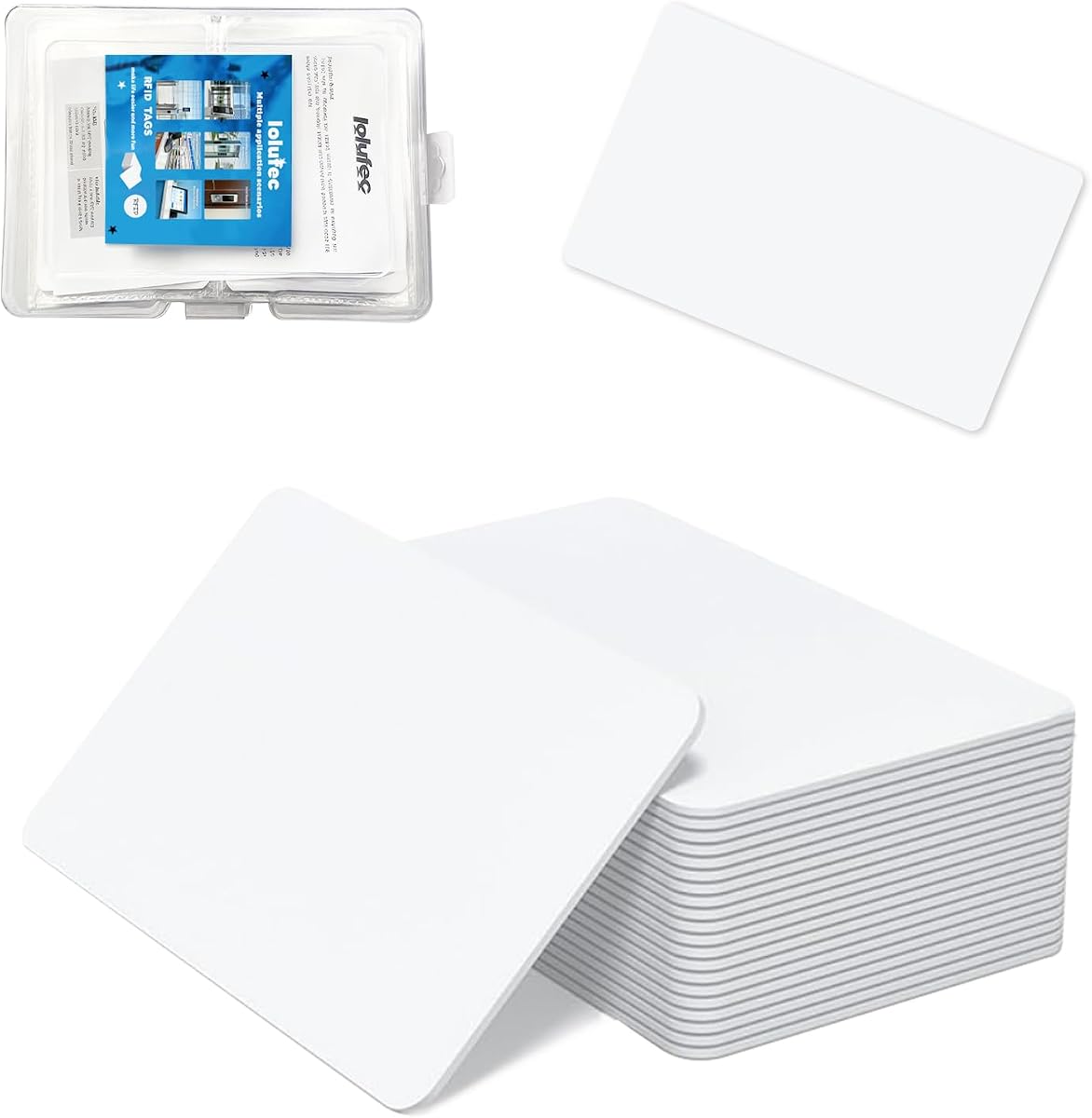
These cards come in an 80-pack with a protective storage box. The waterproof PVC surface supports thermal printing for custom IDs. They operate at 13.56MHz with standard 16 sectors. While the UID cannot be changed, data sectors are writable for specific permissions. This balance of fixed ID and writable data is ideal for many businesses.
The limitation is the inability to rewrite the UID, which prevents cloning non-matching cards. Users must ensure their systems accept standard MIFARE UIDs. Also, iPhones have limited support for editing data. Despite this, the security features and bulk quantity make these cards a robust choice for corporate use.
Ideal for enterprise access control, these cards ensure consistent identification. The locked UID prevents accidental or malicious data changes on the hardware level. If your priority is stability and security over cloning flexibility, this pack is a strong candidate for your organization's needs.
A factory-locked Sector 0 ensures the card's ID cannot be altered, providing a secure identifier for access systems.
The included plastic storage box keeps the bulk pack organized and protected from physical damage.
We may earn a commission when you buy through this link, at no additional cost to you.
The 5 Pack T5577 125kHz Rewritable RFID Cards are designed for small testing and DIY needs. While no specific rating is listed, the product is described as suitable for testing and replacing existing tags. It offers a low-risk way to verify compatibility before buying bulk. Each card is blank for custom data.
We may earn a commission when you buy through this link, at no additional cost to you.
These cards work with common 125kHz RFID writers. They are ideal for asset labeling or personal ID projects. The pack includes only five cards, making it perfect for small scale trials. The legal use notice encourages responsible usage within authorized systems.
Since there is no rating, quality consistency might vary compared to established brands. The small quantity limits utility for larger deployments. Users must program the cards themselves. However, the cost is low enough to justify as a first step into RFID customization.
This pack is best for hobbyists or small businesses testing a system. If you want to confirm a writer works before committing to 100 cards, this is a smart start. For personal asset tracking, these five cards offer a simple and affordable entry point.
A small five-card pack allows users to test compatibility with writers and readers without a large financial commitment.
The product explicitly encourages using cards only with systems you own or are authorized to program.
We may earn a commission when you buy through this link, at no additional cost to you.
The 12 PCS T5577 Thick Smart Cards offer a durable option for high-traffic access needs. With a 4.7 rating, users appreciate the robust 1.8mm build. This extra thickness resists bending and physical stress compared to standard cards. They support common 125kHz formats including 1386 and H10301.
We may earn a commission when you buy through this link, at no additional cost to you.
These cards are designed for keyless entry systems and access control points. The T5577 chip allows for repeated erasing and writing. They come with lanyard holes and are made of strong PVC. The durability makes them suitable for employees who carry keys daily or in harsh conditions.
The thickness may prevent them from fitting in slim wallets or specific card slots. They are explicitly not compatible with ONITY systems. However, for standard Prox locks, they perform reliably. The higher rating suggests consistent quality in material and chip function for physical access tasks.
Ideal for industrial or gym environments where cards are used frequently, these are built to last. If standard cards break easily in your setting, these thicker versions provide better longevity. We recommend them for heavy-duty physical access applications requiring robust hardware.
A 1.8mm thickness provides resistance against bending and wear in high-frequency use environments.
Compatibility with 1386 and H10301 formats ensures broad access to common access control readers.
We may earn a commission when you buy through this link, at no additional cost to you.
Selecting the right blank rewritable RFID card requires understanding frequency, chip type, and system requirements. This guide outlines the key factors to consider to ensure compatibility and performance.
The most critical factor is matching the card frequency to your reader. High-frequency 13.56MHz cards work with modern MIFARE systems and smartphones. Low-frequency 125kHz cards are used in older door locks and parking systems. Using the wrong frequency renders the card useless.
Always verify your system's frequency before buying. If your reader supports NFC, opt for 13.56MHz. For standard proximity locks, 125kHz is likely your choice.
Different chips offer varying security and storage. T5577 chips are simple and easy to clone. MIFARE Classic 1K cards have sector-based memory for keys. NTAG chips offer advanced security features like OTP. Choose based on whether you need simple access or data security.
For basic access cloning, T5577 is sufficient. For secure enterprise use, MIFARE with locked blocks is safer.
Rewritable cards have a maximum number of write cycles. Most standard cards support 100,000 writes. This ensures they last years of daily use. If you need frequent data changes, confirm the cycle limit.
Standard 100,000 cycle cards are durable enough for most business and personal uses.
Memory size affects how much data you can store. NTAG Ultralight has 48 bytes. MIFARE 1K has 1024 bytes. Choose based on whether you store a simple ID or complex data like tickets.
For simple access IDs, minimal memory is fine. For event tickets or payment, larger memory is required.
If you need logos, check if the card is printable. Thermal and UV printers work on PVC surfaces. Ordinary inkjet printers usually cannot print on these cards directly. Uncoated surfaces are best for customization.
Use thermal or UV printers for professional branding. Standard inkjet will not work on most PVC RFID cards.
Bulk packs reduce the cost per card significantly. Buying 100 cards is cheaper per unit than 10. However, ensure you have storage space. Small packs are better for testing.
Buy bulk for office needs. Start small if you are unsure of system compatibility.
Thickness and material matter for long-term use. Standard cards are 0.8mm. Thick cards are 1.8mm and resist bending. Waterproof PVC ensures longevity in humid or busy environments.
Choose thicker cards for industrial use. Standard cards work well for office badges.
Some cards have locked sectors that cannot be written. This prevents data loss but limits cloning. Check if Block 0 is unlockable if you need to clone UIDs.
Unlockable Block 0 is needed for UID cloning. Locked Block 0 is better for secure IDs.
To program your cards, you need a compatible RFID writer or copier. Connect the writer to your computer or power it on. Place the blank card on the writer pad and select the write mode. Enter the ID or data you wish to program. Wait for the confirmation light before removing the card.
Care for your cards by avoiding extreme heat or direct sunlight. Keep them away from water if they are not waterproof rated. Do not bend the cards sharply as this can damage the internal antenna. Store them in a protective box or sleeve when not in use.
Regularly clean the surface with a soft dry cloth to remove dust. If you print on the cards, allow the ink to dry completely before use. Avoid using harsh chemicals on the surface. Proper care extends the life of the chip and ensures reliable reads.
You can clone most unencrypted proximity cards. Modern encrypted systems often block cloning. You need a writer that supports the specific chip type. Always check local laws before duplicating access credentials.
125kHz cards are older and used for basic locks. 13.56MHz cards support more data and NFC. They use different chips and cannot be mixed. Check your reader frequency before choosing.
Only 13.56MHz cards work with smartphones. 125kHz cards require specific readers. Most modern phones support NFC which is 13.56MHz. Verify your phone compatibility for writing data.
Most cards support 100,000 write cycles. This number is standard for modern chips. Regular users will rarely reach this limit. The physical card wears out before the chip fails.
No, locked Block 0 cannot be written. These cards have fixed UIDs. You need unlockable cards to change the ID. Check product details for Block 0 status.
Most PVC cards are water-resistant. They survive splashes but not submersion. Check specific product specs for waterproof ratings. Avoid exposing them to high moisture for long periods.
Our top picks range from budget-friendly T5577 options to premium MIFARE packs. The LEXI and JASAG cards offer great value for high-frequency needs. The T5577 packs suit low-frequency systems effectively.
Prioritize frequency compatibility above all else. If your system uses 125kHz, do not buy 13.56MHz cards. Check the chip type and rewrite limits to match your application needs.
Prices and availability change frequently. Verify current details before purchasing to ensure you get the right product for your system.