
ESP32-S3-Nano Microcontroller
5.0Editor score
8MB PSRAM Included
Arduino and MicroPython Ready
Low Cost Development Board
This guide compares the top Arduino Nano ESP32 boards and similar ESP32-S3 microcontrollers for IoT projects based on performance and connectivity.
The Arduino Nano ESP32 represents a significant leap in embedded development with its powerful ESP32-S3 chip. This compact board brings dual-core processing and robust wireless connectivity to hobbyists and professionals alike.
We evaluated ten leading microcontroller boards including the official Nano ESP32 and compatible alternatives. Our comparison focuses on processing power, wireless features, ease of use, and overall value for modern IoT applications.
Each pick highlights specific strengths like USB-C support, Python compatibility, or specialized interfaces. Keep in mind that product availability and pricing can fluctuate so always verify details before purchasing your next development board.
5.0Editor score

4.6Editor score

4.7Editor score
The following table provides a side-by-side look at the key specifications and features of each microcontroller board to help you find the right fit for your project needs.


The Arduino Nano ESP32 stands out as the premier choice for developers seeking a balance of power and ease of use. With a robust 4.6 rating from users, this board delivers exceptional performance for a variety of IoT and embedded applications. Its integration of the ESP32-S3 chip provides a significant upgrade over previous Nano models in terms of speed and wireless capabilities.
We may earn a commission when you buy through this link, at no additional cost to you.
At the heart of this board is the ESP32-S3 microcontroller featuring a dual-core Xtensa 32-bit LX7 processor running at up to 240 MHz. This high-performance setup allows for real-time data processing voice recognition and even machine learning tasks at the edge. The board also supports both Wi-Fi and Bluetooth 5.0 enabling seamless communication with networks cloud platforms and other devices. Additionally the USB-C port ensures faster programming and better power delivery compared to older micro-USB standards.
While the board offers immense capabilities users should be aware that it comes at a slightly higher price point than some third-party alternatives. Furthermore leveraging its full potential may require familiarity with the Arduino IDE updates and MicroPython environments. These trade-offs are generally acceptable given the superior build quality official support and advanced feature set that the Nano ESP32 provides.
This board is ideal for hobbyists students and professionals who need a reliable platform for smart home systems wearable tech or complex automation projects. The combination of HID support for custom input devices and MicroPython compatibility makes it accessible for those who prefer Python over C++. If you are looking for a future-proof microcontroller that balances performance with usability the Arduino Nano ESP32 is the top recommendation.
The dual-mode wireless support ensures that your project can connect to Wi-Fi networks or other Bluetooth devices without needing external modules.
MicroPython compatibility allows for rapid prototyping and easier scripting which is perfect for educational purposes or quick iterations.
We may earn a commission when you buy through this link, at no additional cost to you.
For builders on a tight budget the ESP32-S3-Nano offers incredible value with a perfect 5.0 rating from satisfied users. This board packs the powerful ESP32-S3R8 chip into a compact development platform that rivals more expensive options. It is an excellent choice for those who need high performance without breaking the bank.
We may earn a commission when you buy through this link, at no additional cost to you.
This microcontroller features an Xtensa 32-bit LX7 dual-core processor capable of running at 240 MHz. It includes 512KB SRAM 384KB ROM 8MB PSRAM and 16MB Flash memory providing ample space for complex applications. The board supports seamless switching between Arduino and MicroPython programming allowing for flexible usage depending on your project needs. It is also compatible with Arduino IoT Cloud for remote monitoring and control via a dedicated app.
While this board offers fantastic performance users should note that it is a third-party product which may come with less official documentation compared to the official Arduino brand. There might also be slight variations in build quality depending on the manufacturing batch. However these factors are minor considering the price point and the robust feature set that makes it highly competitive.
We recommend this board for students makers and developers who want to experiment with ESP32-S3 technology affordably. The integrated features and high memory capacity make it suitable for projects requiring significant data handling or cloud connectivity. If you are looking for a budget-friendly option that does not compromise on core capabilities this is an outstanding pick.
With 8MB of PSRAM and 16MB of Flash this board handles large datasets and complex programs effortlessly.
The ability to switch between Arduino C++ and MicroPython allows developers to choose the best tool for each task.
We may earn a commission when you buy through this link, at no additional cost to you.
The Arduino UNO R4 WiFi brings advanced features to the ESP32 family making it a top premium choice with a 4.7 rating. This board combines the Renesas RA4M1 microcontroller with the ESP32-S3 chip offering a unique dual-core setup. It is designed for users who need industrial-grade connectivity and precise analog control.
We may earn a commission when you buy through this link, at no additional cost to you.
Key features include robust wireless connectivity with Wi-Fi and Bluetooth 5.0 alongside modern interfaces like USB-C and CAN. The CAN support is particularly valuable for industrial automotive or robotic systems requiring reliable real-time communication. Additionally the board includes a 12-bit DAC and operational amplifier for high-precision analog signal generation which is ideal for audio projects or sensor interfacing. The integrated 12×8 LED matrix provides immediate visual feedback for status or data display.
While this board offers unparalleled capabilities it comes in a larger form factor compared to the Nano ESP32 which may not fit compact wearable projects. The price is also higher reflecting the advanced hardware and specialized interfaces. These trade-offs are acceptable for professionals requiring specific industrial or high-precision capabilities that standard boards lack.
This device is perfect for advanced engineers automotive hobbyists and industrial automation developers. The combination of dual-core processing and specialized peripherals allows for complex system integration without external modules. If you need a high-end microcontroller with versatile connectivity and precision control the UNO R4 WiFi is a premium investment worth considering.
Support for Controller Area Network protocols enables direct connection to automotive or industrial control systems.
The 12-bit DAC and OP-AMP ensure high quality audio and signal generation without needing external converters.
We may earn a commission when you buy through this link, at no additional cost to you.
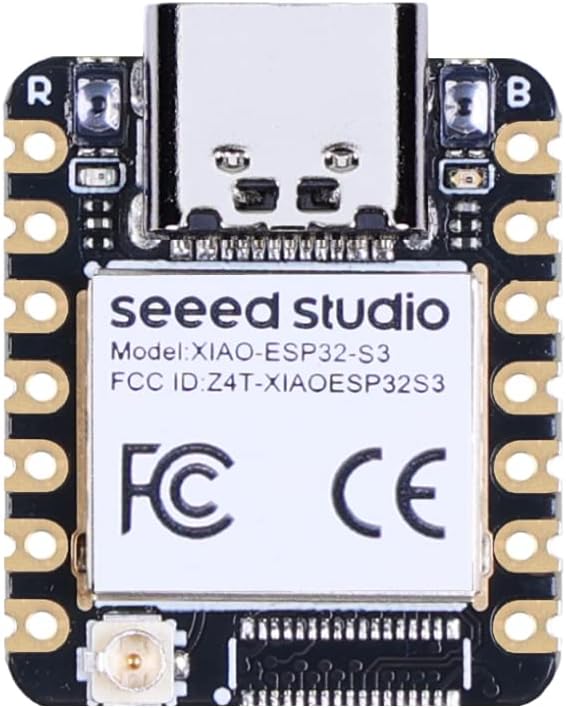
The Seeed Studio XIAO ESP32S3 delivers exceptional performance in a tiny package earning a 4.7 rating from users. This board is specifically designed for space-constrained projects like wearables and compact robotics. It retains the powerful capabilities of the ESP32-S3 while minimizing physical size and power consumption.
We may earn a commission when you buy through this link, at no additional cost to you.
This board incorporates the ESP32-S3 32-bit dual-core Xtensa processor running at 240MHz. It supports 2.4GHz Wi-Fi and BLE 5.0 for wireless communication and can reach over 100 meters with a U.FL antenna. The elaborate power design includes lithium battery charge management and four power consumption models allowing for deep sleep modes as low as 14uA. Its thumb-sized design makes it ideal for projects where space is limited.
While the compact design is a major advantage users should note that some headers may require soldering and there are fewer GPIO pins compared to larger boards. This limits its use for projects requiring many external components. However for battery-powered or portable applications the power efficiency and small size are highly acceptable trade-offs.
We recommend this board for makers creating smart home devices wearable tech or portable sensors. The battery management and low power modes ensure longer device life without external power sources. If you need a tiny yet powerful microcontroller for portable projects the XIAO ESP32S3 is an excellent choice.
Deep sleep modes down to 14uA allow battery-powered devices to last months or even years on a single charge.
Despite its size the board offers a variety of interfaces including SPI I2C and UART for connecting sensors.
We may earn a commission when you buy through this link, at no additional cost to you.
The ESP32-P4-NANO stands out with its focus on visual and voice processing earning a 4.8 rating from tech enthusiasts. This board is designed for applications that require handling images audio or video at the edge. It uses a powerful RISC-V dual-core architecture to deliver high performance for multimedia tasks.
We may earn a commission when you buy through this link, at no additional cost to you.
Adopting the ESP32-P4 chip this board includes RISC-V 32-bit dual-core and single-core processors. It features interfaces like MIPI-CSI and DSI for connecting displays and cameras along with a USB 2.0 OTG and Ethernet. The onboard image and voice processing capabilities include JPEG Codec and H264 encoder which are ideal for computer vision projects. Security features like secure boot and cryptographic accelerators ensure data protection.
While the board offers advanced capabilities it comes at a higher cost and may be complex for beginners who only need basic connectivity. The specific focus on multimedia might be overkill for simple IoT sensor projects. However for those building interactive displays or camera systems the specialized hardware is a significant advantage.
This board is best suited for robotics robotics and advanced multimedia developers. The ability to handle raw camera data and render on screens directly simplifies complex designs. If you are working on projects involving visual feedback or image analysis the ESP32-P4-NANO is a powerful tool.
Native MIPI interfaces allow direct connection to modern displays and cameras without extra breakout boards.
Built-in hardware security features protect your application code and data from unauthorized access.
We may earn a commission when you buy through this link, at no additional cost to you.
The Waveshare ESP32-S3 Mini offers great value when bought as a 3-pack earning a 4.4 rating from users. These boards are designed for projects that require multiple nodes or bulk deployment. They feature the reliable ESP32-S3FH4R2 module in a compact footprint.
We may earn a commission when you buy through this link, at no additional cost to you.
Equipped with a dual-core processor running at 240MHz these boards support 2.4GHz Wi-Fi and Bluetooth 5 LE. They include 512KB SRAM 384KB ROM 4MB Flash and 2MB PSRAM providing adequate memory for most tasks. The castellated module design allows for direct soldering onto carrier boards making them perfect for embedded custom PCBs. Flexible clock and power supply settings enable low power consumption in different scenarios.
While these boards are cost-effective they are basic development modules that require external components and wiring to function fully. They do not come with headers or enclosures. This is acceptable for hobbyists who need multiple units for a distributed system or custom designs.
We recommend this option for developers building sensor networks or needing multiple units for testing. The 3-pack pricing makes it economical to experiment with several devices at once. If you need affordable ESP32-S3 units for bulk projects this set is a practical choice.
Castellated edges make it easy to mount these modules directly onto custom PCBs without headers.
Buying three at once reduces unit cost significantly for large scale IoT sensor installations.
We may earn a commission when you buy through this link, at no additional cost to you.
The ELEGOO ESP-32 Super Starter Kit provides a complete learning package for newcomers with a 4.3 rating. It includes over 35 modules and components along with detailed tutorials. This is an excellent way to get started with IoT without sourcing individual parts.
We may earn a commission when you buy through this link, at no additional cost to you.
The kit centers around a powerful ESP-32 board with a dual-core processor and integrated Wi-Fi and Bluetooth 4.2. It supports Arduino IDE for easy programming. The package includes sensors displays motors and input devices allowing for a wide range of projects like weather stations or smart home controllers. Step-by-step online tutorials guide users from basic circuits to advanced applications.
While the kit is extensive it uses the older ESP-32 chipset rather than the newer S3 models. This means it lacks some modern features like USB-C or MicroPython support. However for beginners focusing on fundamental electronics and coding this is an acceptable limitation given the comprehensive nature of the kit.
This product is perfect for students and hobbyists starting their journey in electronics. The structured learning path helps build confidence and practical skills. If you want a one-stop solution to learn ESP32 development this kit is highly recommended.
Detailed guides with code and diagrams simplify the learning process for beginners with no prior experience.
Working with real sensors and components helps reinforce theoretical knowledge through practical application.
We may earn a commission when you buy through this link, at no additional cost to you.
The Arduino Nano 33 IoT focuses on secure and efficient connectivity earning a 4.5 rating from users. It is powered by the SAMD21 ARM Cortex-M0+ microcontroller and includes a u-blox NINA-W102 module. This board is ideal for projects where data security is a top priority.
We may earn a commission when you buy through this link, at no additional cost to you.
Equipped with WiFi and Bluetooth Low Energy the board enables seamless connection to cloud and mobile apps. It features 256KB Flash and 32KB SRAM for complex projects. The inclusion of a u-blox ATECC608A Secure Element enhances security with hardware-level encryption. Pre-soldered headers make it easy to connect on breadboards.
While this board offers great security its processing speed is lower than the ESP32-S3 series. This means it may not be suitable for heavy computation or edge AI tasks. However for standard IoT applications requiring secure data transfer the performance is entirely sufficient.
We recommend this board for home automation and cloud connected projects. The secure element ensures that your data remains protected during transmission. If you need a reliable and secure Arduino board for IoT the Nano 33 IoT is a solid choice.
The secure element provides an extra layer of protection ensuring encrypted communication with cloud services.
The standard Nano footprint allows it to fit into tight spaces and existing projects easily.
We may earn a commission when you buy through this link, at no additional cost to you.
The ESP-WROOM-32 Dev Board is a classic choice for developers relying on a 4.4 rating. It offers the proven performance of the original ESP32 with integrated antenna. This makes it a solid option for standard WiFi and Bluetooth projects.
We may earn a commission when you buy through this link, at no additional cost to you.
This board supports 2.4GHz Dual Mode WiFi and Bluetooth with integrated RF amplifier and filter. It supports three modes AP STA and AP+STA for flexible networking. Compatible with Arduino IDE it includes ultra-low power consumption features for battery devices. It is reliable scalable and safe for a variety of applications.
While this board is reliable it uses Micro-USB and an older Bluetooth standard which may be limiting for modern setups. Newer projects might benefit from USB-C and Bluetooth 5.0 support. However for existing systems or cost sensitive builds this board remains a dependable workhorse.
We recommend this for general purpose IoT projects and prototyping. The integrated RF components simplify design and reduce external parts. If you are comfortable with Micro-USB and need a stable ESP32 board this is a great pick.
Switching between AP and STA modes allows you to configure the board as a server or client easily.
Optimized power consumption makes it suitable for battery operated sensors and remote monitoring.
We may earn a commission when you buy through this link, at no additional cost to you.
The ELEGOO 3PCS ESP-32 Dev Boards bring modern USB-C convenience to the classic ESP32 earning a 4.7 rating. This pack offers three boards for those building distributed systems. It balances affordability with updated connectivity options.
We may earn a commission when you buy through this link, at no additional cost to you.
These boards feature a 32-bit dual-core ESP32 platform with USB-C for programming via CP2102. They support Wi-Fi and Bluetooth 4.2 for wireless tasks. Flexible power-saving modes include dynamic clock scaling to reduce energy use. Over-the-air update support allows firmware changes without reconnecting physically.
While these boards have USB-C they still use Bluetooth 4.2 and a standard layout which is slightly older than the S3. This limits performance for high-bandwidth audio or large file transfers. However for most standard connectivity needs this is not a significant issue.
We recommend this for makers who want USB-C convenience without upgrading to S3. The 3-pack is great for bulk deployments. If you need multiple boards with USB-C for simple projects this set is practical.
Using USB-C simplifies cabling and is compatible with modern laptops and chargers.
Firmware updates over the air save time by avoiding physical connections after deployment.
We may earn a commission when you buy through this link, at no additional cost to you.
Choosing the right ESP32 board involves considering your specific project needs and technical requirements.
Look for boards with dual-core processors like the ESP32-S3 which run at 240MHz. Higher performance is essential for real-time processing and complex applications.
Prioritize dual-core options for smoother multitasking and faster execution of your code.
Ensure the board supports modern protocols like Wi-Fi 5GHz and Bluetooth 5.0 if you need fast wireless data transfer.
Choose boards with the latest wireless standards to future-proof your projects.
Check the amount of SRAM and Flash available. Boards with PSRAM like 8MB are better for handling large images or datasets.
Select models with ample memory to avoid running into space constraints during development.
USB-C is preferred over Micro-USB for easier cable availability and better power delivery. Also consider specific connectors like CAN or Qwiic if you have specialized hardware needs.
USB-C ensures compatibility with modern tools and simpler power setups.
For battery-powered projects look for boards with deep sleep modes and battery management features. Lower power consumption extends device life significantly.
Prioritize low power features to ensure your device runs longer on batteries.
Check compatibility with your preferred coding environment. Support for MicroPython is a big plus for those who prefer Python over C++.
Choose boards that support your preferred language to speed up your development process.
Official Arduino boards offer quality and support but cost more. Third-party clones often provide similar specs at lower prices.
Balance your budget with the need for official documentation and support.
Nano or XIAO sizes are ideal for wearables and tight spaces. Larger boards like UNO R4 are better for industrial setups with more GPIO.
Select a form factor that fits the physical space of your final product.
To get started download the latest Arduino IDE from the official website and install the necessary board manager tools for ESP32-S3. Connect your board via USB-C and select the correct port to upload your sketches. This setup ensures you can program the microcontroller efficiently.
When handling your board avoid touching the metal pins or chip directly to prevent static discharge. Store the device in a dry place away from moisture or extreme heat to maintain longevity. This care helps prevent damage to sensitive electronic components.
For battery projects implement deep sleep functions in your code to reduce power consumption. Use the built-in power management features to extend battery life significantly. This practice is essential for remote or portable IoT devices.
Yes the Arduino Nano ESP32 supports MicroPython allowing you to write code in Python for embedded systems. This feature is helpful for rapid prototyping and education.
The ESP32-S3 includes more flash memory a neural network accelerator and better multimedia support. It also offers improved USB and Bluetooth 5 capabilities for faster wireless connections.
Yes it is fully compatible with the Arduino IDE. You need to install the ESP32 board manager within the IDE to select the Nano ESP32 board for your projects.
Yes the board supports Bluetooth 5.0 providing improved range and data transfer speeds compared to older Bluetooth versions. This makes it suitable for modern wireless devices.
Yes many ESP32 boards including the Nano ESP32 offer low power modes. You can implement deep sleep to drastically reduce power consumption for long-term battery operation.
Yes the board has integrated Wi-Fi support allowing it to connect directly to networks without external modules. This simplifies hardware design for IoT applications.
The Arduino Nano ESP32 leads the pack with its balance of performance and usability making it the ideal choice for most advanced projects. Alternatives like the XIAO ESP32S3 offer compact options while the UNO R4 provides industrial features.
Prioritize memory capacity and connectivity based on your specific needs. If you need low power look for battery management features. If you need speed and support choose the official Nano model.
Prices and availability change frequently so always check the current listings before making a purchase. Verify the specs match your project requirements to ensure a smooth development experience.