
Light Meter Digital Illuminance Meter
4.4Editor score
0 to 200,000 Lux range
Ambient temperature measurement
4-digit color LCD screen
This guide compares the top analog light meter models for photographers and filmmakers, evaluating accuracy, battery-free operation, and build quality to help
Analog light meters remain a trusted choice for photographers who value simplicity and reliability. These devices measure ambient light without complex electronics, offering a tactile experience that many professionals prefer for precise exposure control in studio and field settings.
We evaluated ten leading models based on accuracy, build quality, and ease of use. Our analysis covers classic battery-free designs alongside modern digital alternatives that support analog workflows, ensuring you find a meter that fits your specific lighting measurement needs.
Each pick highlights key strengths and ideal use cases for different photographers. Prices and availability change frequently, so verify current details before purchasing. This guide helps you navigate the options to select the most suitable light meter for your creative projects.
4.4Editor score

4.6Editor score
5.0Editor score
The following table provides a side-by-side comparison of all ten selected light meters. Review the key specifications and features to understand how each model performs across different measurement scenarios and user requirements.
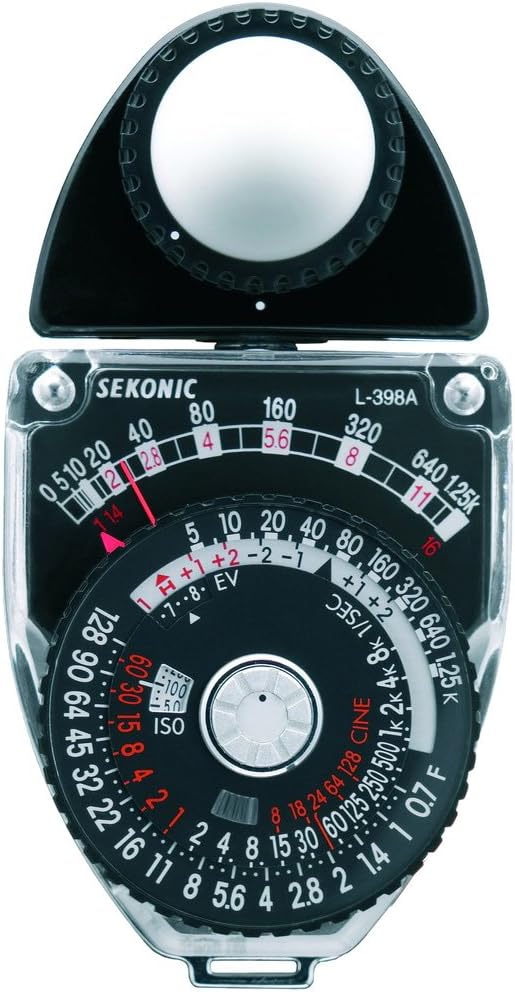


The Sekonic L-398A Studio Deluxe III stands out as the premier analog light meter for professionals seeking reliability and simplicity. With a rating of 4.6 stars, it is celebrated for its battery-free design powered by an amorphous photocell that ensures consistent performance without worrying about power levels.
We may earn a commission when you buy through this link, at no additional cost to you.
Its full dial readout allows users to instantly visualize aperture and shutter speed combinations, streamlining the exposure process during shoots. The swivel head design provides the flexibility needed to measure light from various angles while maintaining a clear view of the display, which is crucial in complex lighting setups.
While it lacks digital memory features found in modern meters, this analog approach eliminates electronic complexity and potential software issues. The trade-off is acceptable for photographers who prefer tactile controls and immediate visual feedback over digital data storage and remote connectivity options.
This meter is ideal for cinematographers and studio photographers who value traditional workflows and require a dependable tool for ambient light measurement. We recommend it for anyone looking to invest in a long-lasting, professional-grade instrument that combines precision with straightforward usability.
The integrated amorphous photosensor generates power from ambient light, removing the need for batteries and ensuring the meter is always ready for use in any environment.
Adjustable head design allows precise positioning of the incident dome while maintaining clear view of the display, improving workflow during complex lighting setups and subject positioning.
We may earn a commission when you buy through this link, at no additional cost to you.
This digital illuminance meter offers exceptional value for users needing basic light measurements without breaking the budget. With a rating of 4.4 stars, it provides a wide measurement range up to 200,000 Lux and includes ambient temperature tracking, making it versatile for various industrial and home applications.
We may earn a commission when you buy through this link, at no additional cost to you.
The 4-digit color LCD screen ensures readability in different lighting conditions, while features like data hold and auto power off enhance usability. Its compact and lightweight design makes it easy to carry for quick checks around offices, factories, or set design projects where precise lux readings are needed.
Though it lacks the specialized incident and reflected modes of professional photography meters, it excels at general illuminance tasks. The trade-off is reasonable for casual users or professionals who need a supplementary tool for environmental lighting assessments rather than camera exposure settings.
Ideal for facility managers, gardeners, and entry-level photographers, this meter delivers reliable performance at a fraction of the cost of premium devices. We recommend it for anyone seeking a practical solution for general light intensity and temperature monitoring in diverse environments.
Measures luminosity from 0 to 200,000 Lux and ambient temperature, offering a wide range of application for set design, factory, office or home use.
Features a 4-digit color LCD screen with MIN/Max readings, data hold, auto power off, and low battery indication for easy operation.
We may earn a commission when you buy through this link, at no additional cost to you.
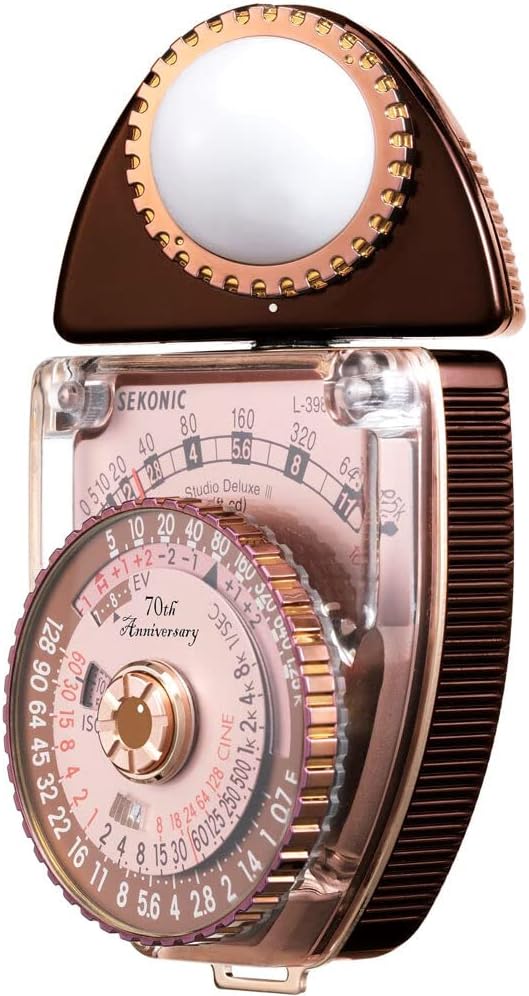
The Sekonic Studio Deluxe III 70th Anniversary edition is a tribute to decades of precision engineering, achieving a perfect 5.0 rating among users. This limited edition model combines the trusted functionality of the classic Studio Deluxe III with unique design elements that celebrate the brand's legacy in professional photography.
We may earn a commission when you buy through this link, at no additional cost to you.
It provides instant reading of a full range of aperture and shutter combinations, maintaining the analog workflow that professionals cherish. The build quality reflects a premium standard, ensuring durability and accuracy that meets the demanding requirements of high-end cinematography and studio work environments.
While the price is higher than standard models, the anniversary edition offers both functional excellence and collectible appeal. The trade-off is worth it for enthusiasts who value craftsmanship and want a distinctive tool that stands out in a professional kit while delivering consistent performance.
This meter is recommended for collectors, seasoned professionals, and photographers who appreciate heritage designs. We suggest it for those seeking a reliable, high-status instrument that honors the history of light metering technology while serving modern exposure needs.
Instant reading of full range of aperture/shutter combinations allows photographers to adjust settings quickly without manual calculations.
Limited edition design celebrates 70 years of Sekonic innovation with premium build quality suitable for professional use.
We may earn a commission when you buy through this link, at no additional cost to you.
This version of the Sekonic L-398A is a favorite among cinematographers for its ability to measure incident and reflected light accurately. It comes with a strap and case, plus essential accessories like the Lumisphere and Lumidisc, ensuring you have everything needed for immediate use on a film set or studio location.
We may earn a commission when you buy through this link, at no additional cost to you.
The 180-degree Lumisphere allows general readings of three-dimensional objects, which is critical for balanced lighting in motion picture production. Its swivel head design lets users hold down the metering button while walking the set to check light levels efficiently without missing a beat during dynamic scenes.
While it shares the same core functionality as other Studio Deluxe III models, this variant emphasizes practicality with included carrying solutions. The trade-off is that it remains purely analog, which may limit data logging options for digital workflows but suits traditional film and video shooting methods perfectly.
We recommend this meter for cinematographers and assistants who need a reliable, ready-to-go tool for incident light readings. It is particularly suitable for on-location shoots where durability and immediate access to measurement accessories are paramount for maintaining a fast workflow.
Comes with case, strap, Lumidisc, Lumigrid and High Slide to expand versatility for varied lighting measurement scenarios and professional applications.
Swivel head allows you to hold down the metering button and walk the set to check light levels during complex shoots.
We may earn a commission when you buy through this link, at no additional cost to you.
The MT-92H introduces an innovative split sensor design that enables simultaneous measurement and monitoring. With a high rating of 4.6, it delivers accurate readings up to 200,000 Lux with a rapid 500ms refresh rate, capturing even subtle light changes that might otherwise go unnoticed during adjustments.
We may earn a commission when you buy through this link, at no additional cost to you.
Its split light sensor technology allows the separate probe to maintain measurement integrity while offering flexible positioning options. This is particularly useful in scenarios where you need to monitor a light source remotely while viewing the display from a comfortable distance or different angle.
The device supports dual measurement units including Lux and foot candles, along with temperature readings, catering to international standards. The trade-off is that it relies on standard AAA batteries and digital displays, which may not appeal to users strictly preferring analog dials, but offers modern convenience.
Ideal for HVAC technicians, lighting engineers, and versatile professionals, this meter combines precision with usability. We suggest it for those who need quick, accurate environmental and light intensity data with the flexibility to position sensors independently for better accuracy.
Innovative split light sensor technology enables simultaneous measurement and monitoring with a separate probe maintaining measurement integrity.
Features an ultra-bright, switchable backlight screen that remains clearly readable in total darkness or direct sunlight.
We may earn a commission when you buy through this link, at no additional cost to you.
This Dr.meter model focuses on high precision and fast response, delivering two readings per second to ensure accurate light intensity data. With a rating of 4.5, it is well-suited for creating ideal growing environments for plants or for general home and office lighting assessments where speed is valued.
We may earn a commission when you buy through this link, at no additional cost to you.
The ability to effortlessly toggle between FC and LUX units simplifies measurement for different regional needs or specific application requirements. A dedicated PEAK button allows you to lock in the highest light pulse value instantly, which is useful for measuring brief high-intensity sources like lightning or laser beams.
While it lacks the specialized incident dome of photography meters, it handles ambient light tasks with ease. The trade-off is its simpler build focused on general illuminance, making it less ideal for complex studio photography but highly effective for environmental monitoring.
We recommend this meter for gardeners, educators, and facility managers who need quick and reliable light intensity readings. It is a practical choice for anyone seeking a straightforward tool to maintain optimal lighting conditions without unnecessary complexity.
High-precision illuminance meter delivers lightning-fast readings 2 times per second, ensuring you get accurate light intensity data.
Instantly lock in and display the highest light pulse value with a single press of the PEAK button for brief high-intensity sources.
We may earn a commission when you buy through this link, at no additional cost to you.
The Extech LT300 is designed for accurate light measurement up to 40,000 lux, making it perfect for ensuring safe and efficient lighting in workplaces and labs. It features a remote sensor capability that allows you to measure light in areas that might be difficult to reach with the main unit.
We may earn a commission when you buy through this link, at no additional cost to you.
Its cosine and color-corrected sensor ensures precise measurements in all lighting conditions, from natural daylight to fluorescent and LED fixtures. The large backlit LCD display makes readings easy to view in dim areas, while one-handed operation ensures comfort for both professionals and casual users alike.
While it is a robust industrial tool, it does not offer the incident light capabilities of dedicated photography meters. The trade-off is acceptable for facility safety inspections and energy use management where lux levels are the primary concern rather than camera exposure calculations.
We suggest this meter for maintenance technicians and safety officers managing lighting compliance. It is ideal for on-the-go inspections where reliability and ease of reading in various environments are critical for maintaining safe standards.
Portable and reliable tool with remote sensor capability makes it ideal for on-the-go inspections in difficult to reach locations.
Cosine and color-corrected sensor provides accurate measurements in all lighting conditions from natural daylight to industrial fixtures.
We may earn a commission when you buy through this link, at no additional cost to you.
The Gossen Luna Pro SBC offers a unique blend of digital readout in EV and manual setting ring transfer. With a rating of 3.7, it provides measuring modes for incident or reflected light readings, catering to photographers who appreciate a hybrid approach to exposure control in a compact device.
We may earn a commission when you buy through this link, at no additional cost to you.
Users can easily transfer the EV reading to a setting ring to read all shutter speed and f-stop combinations at a glance. Additional features include a clock with alarm, timer, and temperature readout, adding utility beyond simple light measurement for planning shots or environmental monitoring.
While it lacks the modern refinement of newer models, it maintains a loyal following for its functional simplicity. The trade-off is that it is older technology, which may mean less accuracy compared to newer digital or amorphous photocell meters, but it remains a solid choice for budget-conscious users.
We recommend this meter for hobbyists or those needing a secondary backup tool with EV display. It is suitable for casual photography workflows where basic measurement needs are met without advanced features or connectivity options.
Digital readout in EV is easily transferred to a setting ring where all the shutter speed f-stop combinations can be read at a glance.
Includes clock with alarm timer and temperature read out for enhanced workflow utility beyond light measurement.
We may earn a commission when you buy through this link, at no additional cost to you.
The Fluke 941 is a specialized illuminance meter tester known for its reliability in professional and industrial settings. With a strong rating of 4.8, it reflects Fluke's reputation for high-quality instruments that withstand rigorous use and deliver precise measurements for compliance and safety checks.
We may earn a commission when you buy through this link, at no additional cost to you.
This device is built to handle tough environments, ensuring consistent performance when measuring light levels in factories or workspaces. The design prioritizes durability and accuracy over aesthetic features, making it a staple for professionals who depend on their tools for critical daily tasks.
While it excels at general illuminance testing, it is not optimized for creative photography workflows with specific aperture settings. The trade-off is that it serves a narrower but vital role, providing trustworthy data for technical assessments rather than creative exposure control.
We recommend this meter for safety inspectors and facility managers requiring certified reliable equipment. It is an ideal choice for industrial applications where consistent and durable performance outweighs the need for artistic exposure features.
Brand Fluke is known for high reliability and quality in professional measurement tools ensuring dependable operation.
High durability construction makes it suitable for various professional environments where ruggedness is required.
We may earn a commission when you buy through this link, at no additional cost to you.
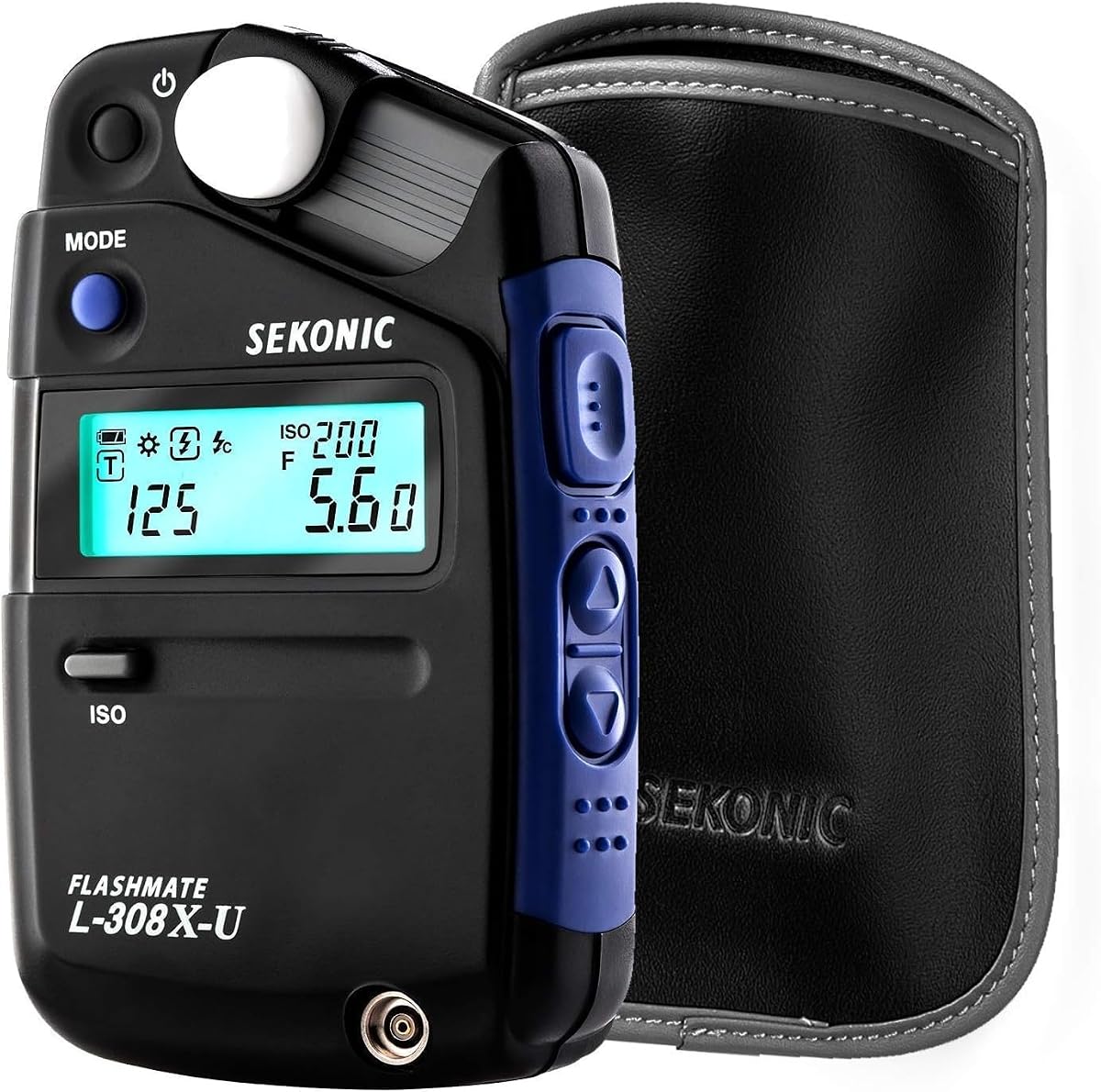
The Sekonic L-308X-U Flashmate is a compact digital meter that offers precision down to a tenth-of-a-stop for both ambient and flash light readings. With a rating of 4.7, it is highly regarded for its ability to switch seamlessly between Photo, Cine, and HD Cine modes, catering to modern photographers and videographers.
We may earn a commission when you buy through this link, at no additional cost to you.
Its pocket-sized design ensures it is always accessible for on-the-go shooting, while the auto backlight LCD improves visibility in low light conditions. The meter handles a wide EV range and provides one-tenth stop accuracy, allowing for fine-tuned exposure control in professional shoots.
Although it is not an analog meter, it captures the spirit of precision that users of traditional models value. The trade-off is reliance on battery power and digital electronics, but the benefits of memory storage and flexible modes often outweigh this for contemporary workflows.
We recommend this meter for hybrid shooters who work with both stills and video. It is a perfect choice for those needing a versatile, pocket-friendly tool that delivers professional-grade accuracy in a convenient digital format.
Photo Mode features shutter or aperture priority display of full range of ambient and flash functions including cord and cordless flash measurement.
HD Cine Mode is perfect for DSLR and mirrorless videographers who need to take exposure readings and control light using shutter speeds.
We may earn a commission when you buy through this link, at no additional cost to you.
Selecting the right light meter involves evaluating accuracy, usability, and specific features that match your photography or measurement needs. This guide outlines the critical factors to consider before purchasing.
Incident meters measure the light falling on a subject, while reflected meters measure light bouncing off it. Most professional analog meters offer both capabilities through interchangeable accessories like a dome or disc.
Ensure the meter supports the measurement type your workflow requires. Incident readings are generally preferred for studio work, while reflected can be useful for specific outdoor scenarios.
Some analog meters use an amorphous photocell to generate power from ambient light, eliminating the need for batteries. This ensures the device is always ready without worrying about power levels.
Battery-free operation is a major reliability factor for professionals working in the field. Choose this option if consistent availability is a priority over advanced digital features.
Analog dials provide a tactile and immediate visual readout of shutter speed and aperture combinations. Digital displays offer precise numerical values and often additional data like EV numbers.
Decide if you prefer the classic dial interface or modern digital readout. Each style has benefits for quick adjustments and data recording depending on your shooting speed.
Professional meters are built to withstand drops and rough handling in studio or field environments. Look for durable materials and protective cases included in the package.
Invest in a sturdy build if you travel often or work in challenging conditions. Durability ensures your meter remains accurate and functional over many years of use.
Essential accessories include lumisphere, lumidisc, straps, and cases. Some kits provide all necessary tools for both incident and reflected measurements right out of the box.
Check what is included to avoid extra costs. A complete kit saves time and ensures you have the right tools for every measurement scenario immediately.
Ensure the meter covers the range of light levels you typically encounter. High accuracy is crucial for professional work to avoid blown highlights or lost shadows.
Select a device with a sufficient lux range and precision that meets your standards. Accurate readings form the foundation of proper exposure in any setting.
Consider how intuitive the controls are and whether the layout supports quick adjustments. A swivel head or ergonomic design can significantly improve efficiency during shoots.
Prioritize usability if speed matters in your work. A meter that feels comfortable and logical to use reduces frustration and speeds up your shooting process.
Prices vary widely based on features, brand, and build quality. Determine your budget and balance it against the specific features you need for your projects.
Invest in the best model your budget allows that meets your core needs. Quality often translates to longevity and reliability, providing better long-term value.
To get accurate readings, always position the meter's sensor facing the light source or subject depending on whether you are measuring incident or reflected light. Ensure the sensor is unobstructed and the settings on the dial match your camera's ISO for correct exposure calculations.
Maintain your meter by storing it in the provided case when not in use to protect it from dust and physical damage. If your model uses batteries, replace them promptly when the indicator suggests low power to prevent leakage or operational failure.
Periodically check your meter's accuracy against a known light source or another calibrated device. Keep the sensor clean by gently wiping it with a soft cloth to avoid dirt or smudges that could affect reading precision during critical shoots.
Incident light measures the light falling onto a subject using a dome sensor, while reflected light measures the light bouncing off a subject using a directional sensor. Incident readings are generally more reliable for studio work as they avoid variations in subject reflectance.
Not all analog meters require batteries. Some models like the Sekonic L-398A use an amorphous photocell to generate power from ambient light, ensuring battery-free operation. Others may rely on small batteries to power internal electronics or displays.
Traditional analog ambient meters typically do not measure electronic flash. To measure flash, you need a meter with a specific flash mode or a dedicated flash meter. Some hybrid models support both ambient and flash measurements effectively.
Most light meters do not require user calibration but should be checked against a known source regularly. If readings seem off, compare them with another meter or a trusted reference to identify any drift or issues with the sensor.
Essential accessories include a lumisphere for incident readings, a lumidisc for selective area measurements, a strap for carrying, and a protective case. High slides or filters may also be included for extended range or specific lighting conditions.
Digital meters offer features like memory storage and precise numerical readouts, while analog meters provide simplicity and reliability without batteries. The choice depends on personal workflow preference as both can deliver accurate exposure data.
Clean the sensor gently with a soft, dry cloth to remove dust or fingerprints. Avoid using liquids or abrasive materials that could damage the photosensitive surface. Store the meter with a protective cover to minimize dust accumulation.
With proper care, analog light meters can last decades due to their durable mechanical construction. Models with battery-free sensors have fewer components to fail, making them especially long-lasting for professional photographers over many years.
Choosing the right analog light meter depends on your workflow needs and preference for reliability. The Sekonic L-398A stands out as the best overall choice for its battery-free design and precision, while the digital budget options offer affordability for general use.
Prioritize features like measurement range, build quality, and accessory inclusion based on your specific tasks. If you work in a studio or on location frequently, investing in a durable and accurate meter will enhance your workflow and exposure control significantly.
Remember that prices and stock availability may change over time. Verify current details and reviews before purchasing to ensure you get the best value for your specific photography or measurement requirements.