
10 Pack 3 Pins AMS1117-3.3 DC 4.75V-12V to 3.3V Voltage Regulator
4.1Editor score
Simple 3-pin linear regulator design
Supports 4.75V to 12V input
0.8A max current for small projects
This guide compares the best 5V to 3V voltage regulator options for stable power conversion in embedded systems and DIY projects.
Finding the right voltage regulator is crucial for powering sensitive electronics reliably. A good regulator ensures stable output despite input fluctuations or changing loads.
We analyzed ten top-rated modules based on efficiency, size, current capacity, and user feedback. This list covers both linear and switching options for diverse needs.
Each pick highlights key specs and ideal use cases. Prices fluctuate often, so check current listings before purchasing to ensure you get the best deal.
4.1Editor score

4.6Editor score

5.0Editor score
This side-by-side comparison helps you quickly identify which regulator matches your voltage, current, and space requirements.


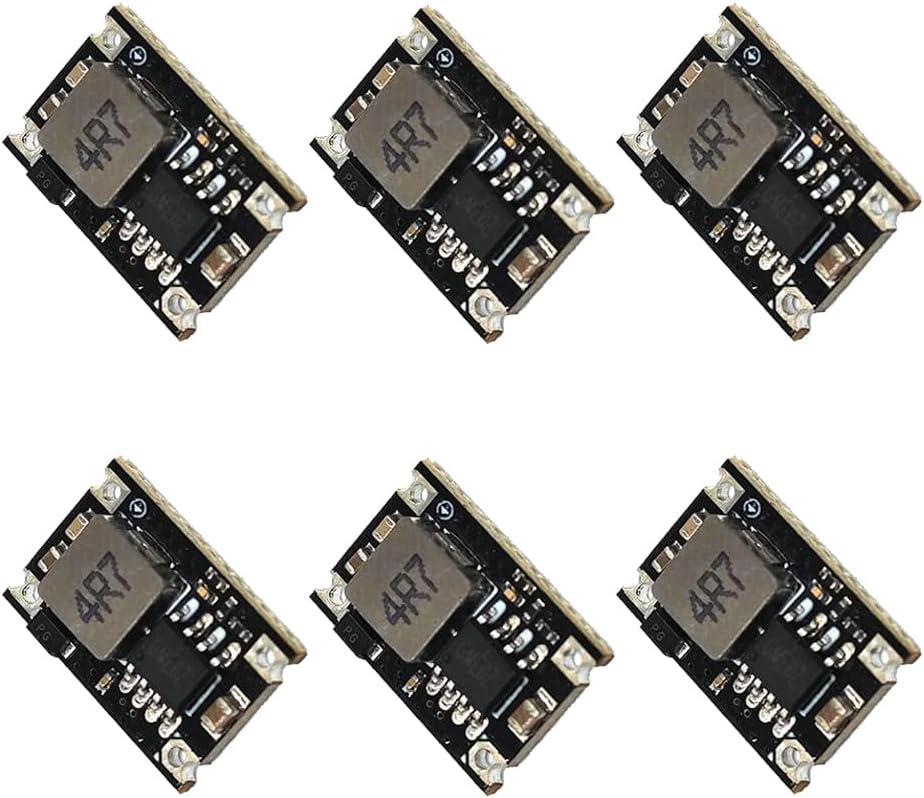
This buck converter module stands out for its wide input range of 4.5V to 24V while delivering stable 3.3V output. It holds a strong 4.6 rating from users who praise its reliability in DIY projects.
We may earn a commission when you buy through this link, at no additional cost to you.
Its ability to supply up to 1.8A makes it suitable for powering microcontrollers and sensors without overheating. The low ripple under 30mV ensures clean power for sensitive electronics.
While excellent for mains-powered designs, inductive loads like motors need external protection diodes. Also, its switching nature might be less efficient for very low power battery applications.
For most hobbyists needing reliable step-down power, this module offers the best balance of performance and size. We recommend it for Arduino and ESP projects requiring stable 3.3V.
Compatible with 5V 9V 12V and 24V supplies so you can use existing power sources without extra adapters.
At just 17.5mm length it fits easily into narrow spaces typical of portable and embedded electronics builds.
We may earn a commission when you buy through this link, at no additional cost to you.
This AMS1117-3.3 pack offers an affordable entry point for linear regulation. With a 4.1 rating it is trusted for small electronics needing simple stable power without complexity.
We may earn a commission when you buy through this link, at no additional cost to you.
Its 0.8A output supports common microcontrollers like STM32 or ESP8266. The linear design produces minimal noise which benefits audio or analog sensor circuits.
Efficiency drops when input voltage exceeds output by much so it is best used with 5V or 9V sources. Higher inputs may cause heat without a heatsink.
For basic prototyping where cost and simplicity matter this pack is unbeatable. Keep it handy for Arduino projects that need clean 3.3V from 5V.
Three pins for input output and ground make wiring straightforward even for beginners with minimal circuit experience.
Built-in overheat shutdown prevents damage if the module gets too hot during heavy current draw or poor ventilation.
We may earn a commission when you buy through this link, at no additional cost to you.
This Mini360 buck module achieves a perfect 5.0 rating thanks to its compact design and reliable performance. It handles 5V to 30V input making it versatile for various power sources.
We may earn a commission when you buy through this link, at no additional cost to you.
Delivering 1.8A output with less than 30mV ripple ensures stable power for demanding loads. Its size saves significant PCB space compared to larger regulators.
As with most switching regulators inductive loads like motors require extra filtering to avoid noise interference. Soldering wires may be needed since no headers are included.
For professional builds where space and reliability are critical this module is the top choice. It is ideal for drones wearables and compact IoT devices.
Measuring only 17.5mm by 12.3mm it fits into tight enclosures where larger regulators simply cannot be installed.
Switching frequency around 1MHz keeps heat low and efficiency high even under full 1.8A load conditions.
We may earn a commission when you buy through this link, at no additional cost to you.
This step-down/up converter handles inputs from 1.8V to 5V delivering stable 3.3V output regardless of battery state. It maintains a perfect 5.0 rating from satisfied users.
We may earn a commission when you buy through this link, at no additional cost to you.
The buck-boost topology allows operation even when input drops below 3.3V which is useful for battery-powered projects. Its small size suits wearable or remote sensors.
The 100mA current limit restricts use to low-power devices like microcontrollers in sleep mode. High current loads will not work with this module.
Use this when battery voltage varies or drops below target. It is ideal for remote sensors where power efficiency and input flexibility matter most.
Works when input is higher or lower than output making it perfect for single-cell battery applications.
With only 100mA output it is designed for sensors and logic circuits that draw minimal current continuously.
We may earn a commission when you buy through this link, at no additional cost to you.
Dorhea offers this AMS1117-3.3 pack designed for stable 3.3V output from 4.75V to 12V input. With a 4.2 rating it is a dependable choice for standard embedded systems.
We may earn a commission when you buy through this link, at no additional cost to you.
Its 0.8A output supports most microcontroller boards without additional components. The 3-pin layout simplifies connections on breadboards or perfboards.
As a linear regulator it generates more heat than switching types when input is much higher than output. Ensure adequate airflow or add a small heatsink.
Great for workshops needing multiple regulators at low cost. Use it for logic level shifting or powering low current sensors from 5V or 9V.
Produces minimal electrical noise which is beneficial for analog circuits and audio signal paths.
Overheat shutdown prevents chip failure when used under heavy load or in warm environments.
We may earn a commission when you buy through this link, at no additional cost to you.
This 15-piece pack of AMS1117-3.3 regulators maintains a perfect 5.0 user rating. It is perfect for teams or makers building multiple identical circuits.
We may earn a commission when you buy through this link, at no additional cost to you.
The +/- 2% output accuracy ensures consistent performance across all units. Low dropout voltage of 1V makes it efficient even when input approaches output.
As a linear device it dissipates excess voltage as heat so avoid high differential inputs. It is best suited for small current loads under 800mA.
Ideal for prototyping workshops needing many units at low cost. Use these for small PCB builds where space and simplicity are valued.
Requires only 1V headroom to regulate properly saving battery life when voltage drops near 3.3V.
Built-in overcurrent and overheat safeguards protect your circuits from damage during short circuits or overloads.
We may earn a commission when you buy through this link, at no additional cost to you.
This module supports input voltages up to 30V which is rare in this price range. It delivers 1.8A output from a compact black PCB with reverse polarity markings.
We may earn a commission when you buy through this link, at no additional cost to you.
Its 3.4 rating suggests mixed experiences possibly due to soldering needs or lack of headers. However the high current capacity makes it capable for heavier loads.
Ensure input voltage is stable since high voltage may stress components if not properly filtered. Reverse polarity markings help prevent wiring mistakes.
Use when your power source exceeds 24V or 24V batteries. It is suitable for industrial or vehicle projects needing robust step-down power.
Accepts up to 30V input making it ideal for 24V systems or industrial power supplies.
Measuring under 0.7 inches long it fits easily into space-constrained embedded system enclosures.
We may earn a commission when you buy through this link, at no additional cost to you.
This converter offers a broad input range from 4.5V to 30V with peak output of 1.8A. It is rated as pre-tested ensuring functional units upon arrival.
We may earn a commission when you buy through this link, at no additional cost to you.
Its compact size and low ripple make it suitable for sensitive electronics. The wide input range supports battery and mains applications alike.
Without user ratings it is hard to assess long-term reliability but specs suggest solid performance. Soldering connections adds installation steps.
Choose this for projects needing flexible input power and high current in a small footprint. Good for vehicle or solar-powered IoT setups.
Each unit is tested before shipping reducing risk of receiving defective components in your batch.
Output ripple under 30mV at 1.5MHz ensures stable voltage for microcontroller logic and sensors.
We may earn a commission when you buy through this link, at no additional cost to you.
This AMS1117-3.3 pack has a perfect 5.0 rating indicating high customer satisfaction. Designed for inputs from 4.5V to 7V it simplifies 5V to 3.3V conversion.
We may earn a commission when you buy through this link, at no additional cost to you.
The 0.8A output meets needs of most low power microcontrollers. Its fixed output voltage removes need for adjustable trimpots or resistors.
Efficiency is lower since excess voltage becomes heat limiting battery applications. Keep input voltage close to 5V for best thermal performance.
Ideal for Arduino or ESP8266 projects where simplicity matters. Use this pack when you need reliable 3.3V from 5V sources.
No need to tune resistors as output is factory set to stable 3.3V ready to use.
Perfect 5.0 rating shows consistent quality and reliability across units purchased.
We may earn a commission when you buy through this link, at no additional cost to you.
This MP1584EN buck module earns a 4.9 rating for its reliable high current performance. It supports inputs up to 24V with compact PCB-friendly dimensions.
We may earn a commission when you buy through this link, at no additional cost to you.
Delivering 1.8A with less than 30mV ripple makes it great for motor controllers or multi-sensor arrays. Its small size saves valuable PCB area.
Inductive loads require external protection diodes to avoid back EMF damage. Solder wires directly for permanent installation since no headers included.
Choose this for power-heavy 3.3V projects needing efficiency and low noise. Perfect for drones robotics and advanced IoT prototypes.
Supports 1.8A output efficiently minimizing heat compared to linear regulators at similar loads.
Fits into tight spaces like aircraft or wearable electronics due to Mini360 form factor.
We may earn a commission when you buy through this link, at no additional cost to you.
Selecting the right regulator depends on input voltage current needs and application type. Understanding these factors ensures reliable and efficient power delivery.
Check your power source voltage before buying. Most regulators support 5V to 24V or up to 30V input. Choose one matching your battery or supply to avoid damage.
Always ensure input voltage stays within specified limits for safe operation and longevity.
Calculate total current draw of your circuit. If load exceeds regulator rating it may overheat or fail. Select a unit with at least 20% more capacity.
For most microcontrollers 800mA to 1.8A is sufficient. Higher current needs require robust heat dissipation.
Linear regulators like AMS1117 are simple and low noise but inefficient at high voltage differences. Switching buck converters are more efficient but add complexity.
Choose switching for battery power or high voltage inputs. Use linear for noise-sensitive circuits like audio.
Stable output voltage ensures reliable microcontroller operation. Look for regulators with tight tolerance like +/- 2% or better for critical applications.
Poor regulation can cause brownouts or logic errors in digital circuits.
Measure available space on your PCB or enclosure. Modules range from tiny 10mm sizes to larger boards with heat sinks.
Smaller sizes suit wearables but may limit current capacity. Consider thermal needs too.
Higher voltage drops create more heat especially in linear regulators. Ensure airflow or add heatsinks if operating near max current.
Poor cooling leads to thermal shutdown or damage over time.
Motors and relays generate voltage spikes. Add diodes and capacitors when using regulators with inductive loads to prevent circuit damage.
Many buck modules warn about this requirement in product details.
Buying multiple units often saves money. Ensure the pack size matches your project needs to avoid waste.
Compare price per unit but prioritize quality and reliability.
Connect input to your power source and output to your circuit. Ensure correct polarity with positive to VIN and ground to GND pins.
Add capacitors near input and output pins to reduce noise. Use 10uF ceramic capacitors for most applications to stabilize voltage.
Avoid placing regulators near heat-generating components. Ensure airflow or heatsinks if operating continuously at high current load.
Yes many regulators listed support 5V input and output 3.3V suitable for ESP32. Ensure current rating exceeds ESP32 peak draw of 500mA.
Linear regulators are simpler and quieter but waste voltage as heat. Switching converters are more efficient but add noise and complexity to design.
Yes most require capacitors near input and output pins for stability. Use at least 10uF ceramic caps for best performance and noise reduction.
Yes switching buck modules with 24V input ratings work well. Check each product specs since AMS1117 units are limited to 12V input maximum.
Add a small heatsink and ensure airflow around the component. Also keep voltage differential low by using closest input voltage possible.
Yes buck modules handle variable input voltage from solar panels well. Ensure input range covers expected panel voltage under varying sunlight.
Our top picks include efficient buck modules for most projects and reliable linear options for simple circuits. Each offers unique strengths based on needs.
Prioritize input range and current capacity to match your power source and load. Efficiency matters most for battery-powered devices.
Prices and availability change frequently so verify current listings before purchase to ensure you get the best deal available.