
Handheld Fish Finder Portable
4.2Editor score
Portable design for kayak use
Works in fresh and salt water
Detects depth and fish location
Finding a reliable fishfinder does not require spending a fortune on high-end equipment. Modern budget models offer essential sonar features that help anglers locate fish and structure effectively. Whether you are kayaking or fishing from a boat, the right device enhances your time on the water significantly.
We evaluated ten popular cheap fishfinder options based on performance, ease of use, and value. Our analysis considers sonar clarity, display quality, and connectivity features to ensure you get the most for your investment. Each product was chosen for its ability to deliver consistent results in various water conditions.
Every pick in this list highlights specific strengths like portability or advanced mapping capabilities. Prices fluctuate often so please check the current listings before purchasing. We aim to help you make an informed decision that matches your specific fishing style and budget constraints.
4.2Editor score
4.6Editor score

4.7Editor score
As an Amazon Associate we earn from qualifying purchases.
This side-by-side comparison highlights key specifications across all ten selected models to help you identify the best match for your needs quickly.


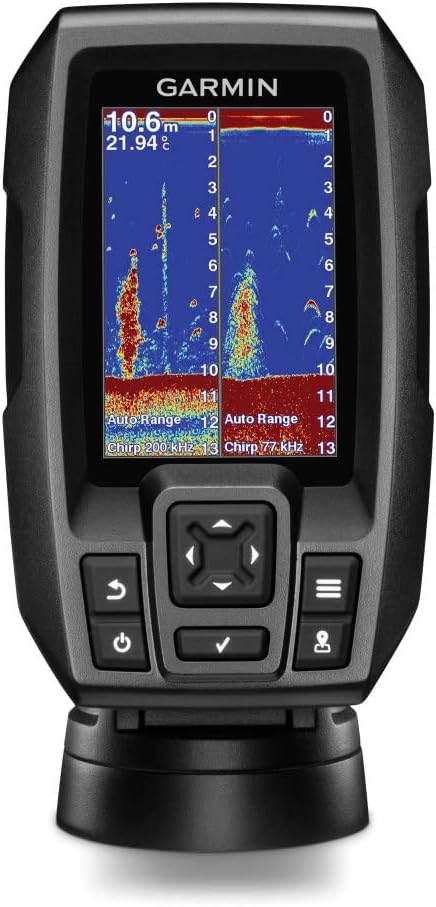
The Garmin 010-01550-00 Striker 4 stands out as a top choice for anglers seeking reliable performance without overspending. It delivers clear sonar images and essential GPS features that make navigating familiar waters much easier. Users appreciate its straightforward interface and ability to show fish arches clearly.
We may earn a commission when you buy through this link, at no additional cost to you.
Its Clear Vu scanning sonar provides near photographic images of objects and fish under the boat. This helps identify structure like stumps and brush piles with high detail. The Chirp sonar ensures better target separation so you can see individual fish more accurately.
While the screen is compact compared to larger models, it remains legible in most lighting conditions. The IPX7 rating ensures it can withstand splashes or rain. Some users may find the limited map data a drawback for new areas but it suffices for known lakes.
This device is ideal for beginners or casual anglers who want solid technology in a package. If you value ease of use and clear sonar feedback, this model is a strong recommendation. It balances cost and capability better than many competitors.
The Clear Vu scanning sonar offers detailed views of underwater structure and fish locations.
Built-in waypoint mapping allows you to mark and navigate to favorite spots effortlessly.
We may earn a commission when you buy through this link, at no additional cost to you.
The Lowrance Eagle Fish Finder provides an accessible entry point for anglers wanting quality imaging at a lower cost. Its IPS screen remains visible even in bright sunlight which is crucial for daytime fishing. The design focuses on simplicity so you can spend less time adjusting settings.
We may earn a commission when you buy through this link, at no additional cost to you.
Auto-Tuning Sonar optimizes settings automatically reducing the need for manual adjustments while on the water. The included Bullet Skimmer delivers a broad beam suitable for small boats and kayaks. This coverage helps locate fish over a wider area without complex calibration.
Installation is straightforward thanks to the twist-lock connector that simplifies attaching the display. The portrait design fits well in tight spaces on smaller vessels. However, the basic map options might not satisfy those needing detailed charting capabilities.
This unit is perfect for those prioritizing ease of use and clear viewing angles. If you want a reliable sonar that requires minimal fuss, the Lowrance Eagle is a smart pick. It delivers core functionality effectively for the price.
The IPS portrait screen ensures clear visibility from wide angles and in bright sun.
Automatic optimization lets you focus on fishing rather than tweaking technical settings.
We may earn a commission when you buy through this link, at no additional cost to you.
The Garmin STRIKER Vivid 4cv offers advanced color imaging that rivals more expensive units. It is designed to be easy to use with vibrant palettes that help distinguish fish from structure instantly. This model is ideal for those who want premium visuals without paying flagship prices.
We may earn a commission when you buy through this link, at no additional cost to you.
Its Vivid scanning sonar color palettes make it simple to see different targets. The included Quickdraw Contours mapping allows you to create custom maps of your favorite spots quickly. High sensitivity GPS ensures accurate tracking of your boat speed and location.
The 4-inch color display is bright and clear though it remains compact. Some users might prefer a larger screen for extensive navigation but this fits well in budget categories. The tilt/swivel mount adds flexibility for viewing angles on different boats.
If you want enhanced visual detail and mapping capabilities in an affordable package this is a great choice. It bridges the gap between basic finders and high-end chartplotters effectively. Anglers looking for color clarity will appreciate this unit.
Vivid color palettes provide clearer distinction between fish and underwater structures.
Quickdraw Contours lets you create depth maps of your specific fishing areas.
We may earn a commission when you buy through this link, at no additional cost to you.
The Handheld Fish Finder Portable is designed for anglers who need maximum portability on the water. It fits easily in a tackle box or can be worn around the neck with the included strap. This makes it perfect for kayak fishing or walking shorelines.
We may earn a commission when you buy through this link, at no additional cost to you.
It shows water depth approximate fish location and even indicates fish size. The 200 kHz sonar frequency provides reliable data in fresh and salt water. You can use it while moving slowly which adds versatility compared to stationary units.
Power comes from AAA batteries which are easy to replace anywhere. The display saves settings when turned off so you do not need to reconfigure often. While the screen is small it provides the essential data needed for casual fishing.
This unit is ideal for travelers or those with very small boats where space is scarce. If you want a no fuss tool that you can grab and go this fits the bill. It offers great value for the price point.
Compact size allows you to take it anywhere including remote fishing spots.
Works for ice fishing kayak trips and shore fishing alike with ease.
We may earn a commission when you buy through this link, at no additional cost to you.
The Humminbird PiranhaMAX 4 offers solid sonar performance with Dual Beam technology for flexible scanning. You can choose between narrow and wide beams depending on your needs for detail or coverage. This makes it versatile for various fishing environments.
We may earn a commission when you buy through this link, at no additional cost to you.
The tilt and swivel mount allows quick adjustment of the viewing angle which is helpful on moving boats. It includes a transom-mount transducer so you have everything needed for installation. The device is easy to setup and use for beginners.
While it lacks GPS mapping it provides accurate depth and fish arches. The display is clear enough for daytime use but might be hard to read in low light. The one-year warranty adds peace of mind regarding manufacturer support.
This model is suitable for anglers who prioritize sonar clarity over advanced navigation. If you are focused on finding fish and do not need charts this is a good fit. Humminbird reputation for reliability makes it a safe buy.
Choose between narrow and wide beams to suit different fishing conditions.
Tilt and swivel mount ensures you can see the screen comfortably.
We may earn a commission when you buy through this link, at no additional cost to you.
The LUCKY Kayak Portable Fish is tailored for anglers on kayaks or small boats who need compact tech. It displays fish depth water depth and bottom terrain clearly on a small LCD. The included neck strap helps keep your hands free for paddling.
We may earn a commission when you buy through this link, at no additional cost to you.
Its depth range reaches up to 328 feet which covers most inland waters effectively. The fish alarm alerts you when schools pass by so you can focus on casting. Five sensitivity levels allow tuning for clear or turbid water.
The backlight feature makes it possible to see readings in darkness. However battery life is around four hours so extra cells might be needed for long trips. It is an affordable option that delivers necessary information for casual anglers.
This device works well for shore fishing or ice fishing too. If you want a dedicated kayak tool that is easy to store this is a strong candidate. It offers good value for entry-level fishing needs.
Audible alerts notify you when fish schools are detected nearby.
Backlit display ensures you can read data even in the dark.
We may earn a commission when you buy through this link, at no additional cost to you.
The Humminbird Helix 5 Chirp brings advanced chartplotter features to a mid-range device. It includes Dual Spectrum CHIRP Sonar for superior fish identification and structure imaging. With enhanced GPS it covers over 10000 lakes making it useful for new waters.
We may earn a commission when you buy through this link, at no additional cost to you.
AutoChart Live allows real-time mapping of depth and bottom hardness while you boat. This feature helps you build custom maps without expensive chart subscriptions. The keypad control is reliable even in rough weather conditions.
The unit is more complex than basic finders but offers significant navigation power. While it is pricier than entry models it delivers features found in much costlier gear. The included Basemap gives immediate value upon purchase.
This is an excellent choice for those who want GPS and detailed mapping together. If you explore new lakes often the mapping capability pays off quickly. It balances advanced tools with usability well.
Dual Spectrum CHIRP provides crisp fish arches and better target separation.
AutoChart Live creates depth maps in real-time during your boat trip.
We may earn a commission when you buy through this link, at no additional cost to you.
This portable fishfinder uses a wireless sensor that can be cast up to 262 feet away. It is perfect for shore fishing or boats where mounting a transducer is difficult. The sensor attaches to your line with small holes for tethering.
We may earn a commission when you buy through this link, at no additional cost to you.
It shows water depth temperature fish size and bottom contour on a color screen. The display has two background colors so you can switch for sunlight or night. This flexibility ensures readability in changing light conditions.
Both the sensor and receiver are rechargeable which saves on battery costs. The wireless setup means no drilling into the hull is required for use. Note that checking sensor battery status requires putting it in water.
Ideal for shore anglers this device offers freedom from fixed mounts. It provides a complete solution for those who need mobility and clear data. The rechargeable aspect makes it a green choice for daily use.
Wireless sensor allows you to cast it far from shore or boat.
Switchable background colors improve readability in bright sun or dark.
We may earn a commission when you buy through this link, at no additional cost to you.
This model features a 2.4 inch colorful LCD that is easy to read. It detects fish size water temperature and depth clearly. The sensor has an attractive lamp that turns on when touching water which may help attract fish.
We may earn a commission when you buy through this link, at no additional cost to you.
Depth detection goes up to 147 feet which covers most recreational needs. The unit supports 21 operating languages making it accessible globally. A fish alarm sounds when targets pass the sensor zone.
The rechargeable sensor is convenient for multi-day trips without carrying batteries. While depth is limited to 147 feet it is sufficient for many lakes and rivers. The design is friendly for casual anglers who value visuals.
This is a good gift choice for family or friends who fish. It combines useful data with a user-friendly design. If you want a colorful display and simple operation this is a solid option.
Large colorful screen makes data easy to view at a glance.
Built-in alarm alerts you when fish are detected within range.
We may earn a commission when you buy through this link, at no additional cost to you.
This device uses both Sonar and Radio frequencies for reliable communication. The wireless setup works for boats kayaks or ice fishing. A color LED display helps you read data in sunlight or darkness easily.
We may earn a commission when you buy through this link, at no additional cost to you.
You can switch between black and white backgrounds to suit lighting. The sensor is mountable or floatable for flexible placement on your boat. Both parts are rechargeable and last about six hours per charge.
Note that fish icons may not show in shallow water under one meter. Also checking sensor power requires placing it in water to activate. These details are manageable with proper usage techniques.
A solid choice for anglers wanting wireless convenience on a budget. It balances features and cost well for general fishing needs. The rechargeable system keeps ongoing costs low for regular users.
Sonar and radio waves provide flexible and reliable data transmission.
Sensor can be mounted or floated to suit different boat setups.
We may earn a commission when you buy through this link, at no additional cost to you.
Choosing a cheap fishfinder involves balancing essential features with your specific fishing style. Here are the most critical factors to consider before buying.
Screen size impacts how easily you can see fish arches and data points while on the water. Brightness and contrast are key for daytime readability especially if you fish in direct sun.
Look for displays that offer clear backlighting for night use or low light conditions.
Basic sonar uses standard waves but modern units may use CHIRP or scanning sonar for better detail. CHIRP offers improved target separation while scanning sonar gives detailed images of structure.
For budget units check if the frequency is suitable for your target species and water depth.
Consider whether you need a fixed unit for a boat or a handheld for shore or kayak. Mounting options should be simple to install and remove to accommodate different vessels.
Handheld units offer the most flexibility for those who fish from multiple locations.
Some cheap fishfinders include basic GPS waypoints which help you mark productive spots. Mapping features vary from simple markers to contour creation for detailed navigation.
If you fish new waters regularly prioritize models with at least waypoint capabilities.
Power sources range from AAA batteries to rechargeable units. Battery life should last for a full day of fishing to avoid mid-trip interruptions.
Rechargeable models reduce long-term costs but require access to charging sources on trips.
Water resistance ratings like IPX7 protect against splashes and rain which is vital on boats. Build quality should withstand bumps and vibration during travel or casting.
Check warranty terms to ensure support in case of early malfunctions or defects.
User interfaces should be intuitive so you can operate the device without distraction. Keyed interfaces and dedicated buttons make adjustments faster than complex touch menus.
Choose models with quick setup options to maximize time spent fishing.
Trusted brands often provide better long term reliability and customer service. Research user reviews for insights on real-world performance in similar conditions to yours.
Ensure that support channels are available for technical questions or warranty claims.
Start by setting up your fishfinder according to the manual ensuring all sensors are securely mounted. For handheld units check battery placement and secure the neck strap properly. For boat units test power connections before launching to avoid issues.
Adjust sensitivity and brightness settings to match water clarity and lighting conditions. Calibrate the sonar by ensuring the transducer is submerged at the correct angle. If using GPS enter waypoints as you find good fishing spots to mark them for later.
After use rinse the device with fresh water to remove salt or debris. Store it in a dry case to protect the screen and electronics. Periodically check batteries or recharge them to maintain long term health.
CHIRP sonar sends a continuous sweep of frequencies while standard sonar uses single pulses. This results in crisper fish arches and better target separation for identifying fish from structure clearly.
Most modern cheap fishfinders are designed to work in both freshwater and saltwater. Always check the product specifications to confirm saltwater compatibility before purchasing.
Yes many models are handheld or portable and do not require permanent mounts. Look for units with neck straps or cases that allow easy transport and usage.
Detection depth varies by model but many budget units reach depths of 300 feet or more. This is sufficient for most lakes and recreational fishing areas.
Some cheap fishfinders include basic GPS waypoints while others focus solely on sonar. If navigation is important look for models with built-in GPS features.
Most handheld units run for about 4 to 6 hours on fresh batteries. Rechargeable models may offer similar times but allow reuse without buying replacements.
We reviewed ten options ranging from portable handhelds to feature-rich mounted units. The Garmin Striker 4 offers the best overall balance of sonar and GPS for most users.
Prioritize display clarity and battery life since these impact daily usability most. Choose based on whether you need portability for kayaking or stability for a boat.
Prices vary frequently so check current deals before finalizing your purchase. With the right tool you can improve your catches without overspending on advanced gear.