
Bingfu Magnetic Base
4.2Editor score
Affordable price point
Magnetic base for quick setup
Compatible with most scanners
This guide compares the best base station scanner antenna models for wideband reception, durability, and signal clarity across VHF UHF and air bands.
Finding the right base station scanner antenna can transform your radio listening experience. Whether you track air traffic or monitor local communications a quality antenna ensures clear signals and reliable performance across multiple bands.
We evaluated ten top models based on frequency coverage build quality and installation ease. Each option offers unique advantages for home bases mobile setups or temporary monitoring needs so you can choose what fits your setup.
Every pick highlights key strengths and limitations to help you decide quickly. Remember that signal conditions vary by location so test thoroughly before committing. Prices fluctuate so verify current deals before purchasing your preferred model.
4.2Editor score
4.7Editor score
5.0Editor score
This side by side comparison lists all ten models with key specifications so you can quickly identify which antenna matches your specific listening requirements.


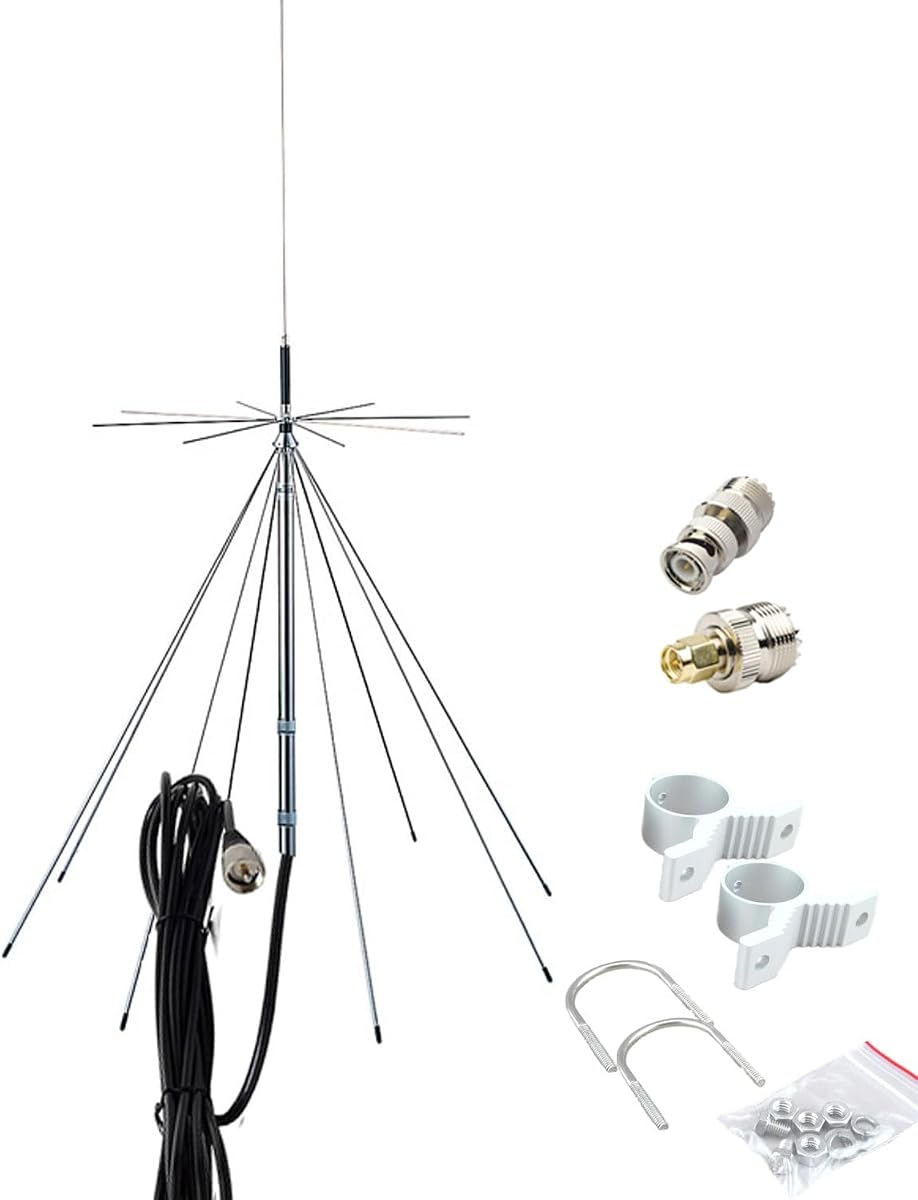
The Discone Antennas D3000 stands out as a top choice for serious listeners needing broad spectrum access. With a rating near 4.7 users praise its reliability across air traffic amateur and utility bands. Its wideband design ensures consistent performance whether tracking aircraft or monitoring public safety channels.
We may earn a commission when you buy through this link, at no additional cost to you.
Its standout feature is the ultra wideband coverage from 25 MHz up to 3000 MHz. This flexibility supports both receiving and transmitting on select bands making it versatile for two way communication. The included kit provides everything needed including coaxial cable and adapters for PL BNC and SMA connectors.
While the stainless steel construction adds durability it also increases weight compared to lighter alternatives. Users planning rooftop mounts should ensure their mast can support the load. The adjustable top loading coil allows further compactness if low frequency reception is not critical for your setup.
This model suits enthusiasts who need dependable long term performance without compromising signal clarity. Whether you use an SDR or desktop scanner this antenna delivers consistent results. Invest in this if you value versatility and durability over minimal cost or size constraints.
The 25 to 3000 MHz range captures everything from shortwave to microwave signals ensuring you never miss critical transmissions.
Adapters for PL BNC and SMA mean you can connect to almost any scanner or radio without buying extra parts.
We may earn a commission when you buy through this link, at no additional cost to you.
The Tram 300 Watt model excels when high power transmit capability is required. Rated at 300 watts max it handles intense radio traffic without degradation. Users value its sturdy stainless steel construction which withstands weather conditions while maintaining signal integrity over years of use.
We may earn a commission when you buy through this link, at no additional cost to you.
This antenna covers 25 MHz to 1300 MHz offering strong reception for most common scanner needs. Its transmit bands include key frequencies like 27 MHz and 144 MHz suitable for CB and ham radio. The SWR stays under 1.5 to 1 ensuring efficient power transfer.
Adjustable radials let you tune performance to your local environment but require more assembly time. The larger size may not fit small balconies or indoor setups easily. If you need high wattage output this is a reliable choice despite the space requirements.
Ideal for users running powerful transmitters who prioritize durability over compactness. The build quality justifies the size and effort needed for setup. Ensure your mast can handle the dimensions before installation for stable long term operation.
Handling 300 watts means you can push high power signals without risking antenna damage or signal loss.
Stainless steel resists rust and corrosion keeping the antenna functional even in harsh coastal or snowy environments.
We may earn a commission when you buy through this link, at no additional cost to you.
This scanner antenna with tripod offers unmatched portability for mobile or temporary monitoring needs. Its compact stainless steel design resists corrosion making it suitable for outdoor use. The included tripod allows quick setup on pat or balconies without permanent mounting hardware.
We may earn a commission when you buy through this link, at no additional cost to you.
Coverage spans 25 to 1300 MHz with a gain of 3.5 dBi balancing signal strength and omnidirectional performance. It works well for ham radio and public safety scanning. The lightweight build reduces strain on surfaces but may sway in strong winds.
While ideal for travel the fixed height of the tripod limits elevation gains compared to roof mounts. Users seeking maximum range might prefer taller stationary options. Still the convenience of assembly and disassembly makes it a top pick for event scanning or emergency readiness.
Buy this if you need a versatile antenna that moves with you. The tripod adds significant value for flexible deployments. Ensure stable ground placement to maintain consistent signal reception during active monitoring sessions.
The tripod allows immediate setup anywhere making it perfect for scouting locations or temporary monitoring spots.
Omnidirectional design ensures signals from any direction are captured equally without needing precise alignment.
We may earn a commission when you buy through this link, at no additional cost to you.
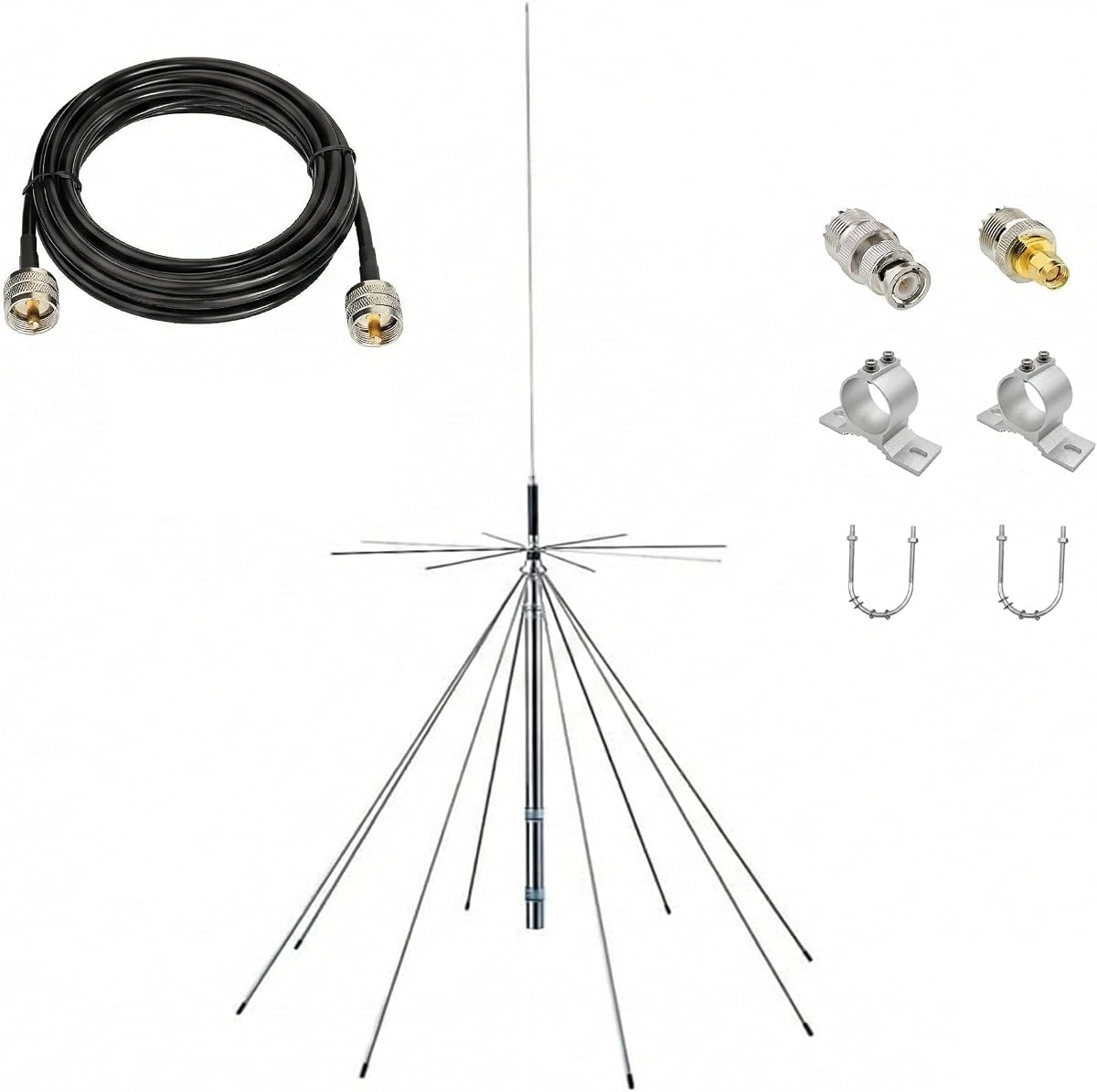
The D3000N Discone achieves a perfect 5.0 rating reflecting exceptional user satisfaction. This premium model offers ultra wideband coverage and supports high power transmission. Every component needed for setup comes in the box simplifying installation for first time buyers.
We may earn a commission when you buy through this link, at no additional cost to you.
Its stainless steel build resists environmental stress while maintaining stable SWR even in high winds. Users report consistent signal clarity across amateur utility and air bands. The ability to transmit up to 200W makes it suitable for serious ham radio operators too.
The included kit has many small parts requiring careful assembly which might challenge those seeking simplicity. While the cost is higher than entry level options the durability and performance justify the investment. Proper setup ensures years of reliable service without degradation.
Choose this if you demand top tier performance and are willing to invest time in assembly. The complete kit eliminates guesswork for mounting and cabling. It remains a benchmark for quality in the scanner antenna category.
Every bolt wrench and cable you need arrives together saving time and preventing missing component issues.
Transmitting up to 200W allows robust communication without risking antenna overheating or performance loss.
We may earn a commission when you buy through this link, at no additional cost to you.
Designed for both indoor and outdoor use this antenna features a magnetic base for quick placement on metal surfaces. Its compact design fits well on desks or windowsills without cluttering space. The included ground plane kit enhances signal strength for VHF and UHF bands.
We may earn a commission when you buy through this link, at no additional cost to you.
Coverage extends from 25 MHz to 3000 MHz allowing versatile listening across many communication types. Connectors include BNC SMA and SO239 adapting to various radio setups. The 16.4ft cable offers flexibility in positioning the scanner away from the window.
Magnetic mounts may slide on smooth non metallic surfaces limiting stability. Users should verify surface compatibility before relying on it for outdoor mounting. While signal range is decent it may not match taller roof mounted models for distant stations.
Ideal for hobbyists needing a versatile desktop solution without permanent installation. The magnetic base adds convenience for travel or temporary setups. Ensure a solid metal surface is available to maintain consistent contact and signal quality.
The magnetic base lets you reposition the antenna instantly without tools or drilling holes in your furniture.
Multiple adapter options mean you can connect to almost any scanner or SDR device without buying extras.
We may earn a commission when you buy through this link, at no additional cost to you.
This GMRS focused antenna delivers strong performance on 2m and 70cm bands while still covering a wide frequency spectrum. The included magnetic base and ground plane kit simplify setup for desktop or roof mounting. Users report clear reception for local public safety and family radio systems.
We may earn a commission when you buy through this link, at no additional cost to you.
Its design includes separate whips for VHF and UHF allowing targeted optimization. The magnetic base works well on metal roofs but may struggle on non conductive surfaces. The 16.4ft cable provides enough reach for most window setups.
While excellent for GMRS it might not outperform specialized VHF models on lower frequencies. The ground plane kit improves efficiency but adds assembly steps. Still it remains a solid choice for households prioritizing local communication monitoring.
Select this if you need reliable GMRS and scanner capability in one unit. The magnetic base allows flexible placement without tools. Check surface compatibility to ensure the antenna stays securely in place during storms.
Separate whips for VHF and UHF ensure each band receives tailored tuning for better signal clarity.
The magnetic base enables quick movement between locations making it ideal for temporary monitoring setups.
We may earn a commission when you buy through this link, at no additional cost to you.
The Bingfu 20-1300MHz offers a budget friendly entry into scanner antenna systems without sacrificing basic performance. Its magnetic base and BNC connector make it compatible with most popular scanners like Uniden and Whistler. Users appreciate the straightforward installation requiring no tools.
We may earn a commission when you buy through this link, at no additional cost to you.
Coverage spans 20 MHz to 1300 MHz covering most common listening bands. The 10 foot cable provides adequate reach for indoor use but may limit outdoor placement. While the build is lighter than premium models it handles normal weather conditions well.
The shorter cable might require extension for window installations far from the device. Users needing high power transmit should look elsewhere as this model focuses on receive only. For general monitoring it delivers solid value relative to its cost.
Choose this if you are on a tight budget or testing the hobby. The magnetic base allows easy relocation when needed. Ensure your scanner has a BNC input or use an adapter for connection.
This model delivers reliable performance at a fraction of the cost of premium options making it accessible for beginners.
No complex assembly or tools are needed so you can start listening within minutes of opening the package.
We may earn a commission when you buy through this link, at no additional cost to you.
This Bingfu model focuses on VHF UHF ham bands while maintaining wide coverage for scanner use. Its magnetic base and BNC connector simplify connection to amateur radios and scanners alike. Users value its lightweight design which reduces stress on mounting surfaces.
We may earn a commission when you buy through this link, at no additional cost to you.
The 20 MHz to 1300 MHz range captures most amateur radio and scanner frequencies effectively. It works well for receiving local repeaters and emergency traffic. The 10 foot cable is short for outdoor use but adequate for indoor setups.
Material quality is basic and may degrade faster in extreme weather compared to stainless steel alternatives. It is best suited for protected placements or temporary outdoor use. The low cost makes it a good spare or travel option.
Ideal for ham operators needing a secondary antenna without heavy investment. The magnetic base allows quick adjustments for signal optimization. Keep it indoors or in sheltered areas to maximize its lifespan.
Optimized for VHF and UHF ham bands ensures clear voice communication and reliable data reception for amateurs.
Works with most Uniden Whistler and Radio Shack scanners out of the box without extra parts.
We may earn a commission when you buy through this link, at no additional cost to you.
This antenna set is tailored for Software Defined Radios and handheld scanners needing compact solutions. The telescopic folding design allows easy storage when not in use. Users rate it 5.0 stars for its flexibility and performance on 2m and 70cm bands.
We may earn a commission when you buy through this link, at no additional cost to you.
Coverage from 95 MHz to 1100 MHz includes aviation ADSB signals and common scanner bands. The magnetic base and included cable simplify connection to desktop SDR units. It supports transmit on 2m and 70cm bands adding versatility.
The telescoping tip can be fragile if overextended or mishandled. Lower frequency reception stops at 95 MHz limiting shortwave utility. For desktop use however it remains a perfect solution for hobbyists with space constraints.
Buy this if you use SDR gear or need a portable antenna for travel. The folding feature protects it during transport. Handle with care to prevent bending or breaking the delicate tip section.
The telescopic design collapses fully so you can store it in a drawer or bag when not in use.
BNC connector and wide band support make it ideal for connecting to RTL-SDR dongles or software radios.
We may earn a commission when you buy through this link, at no additional cost to you.
This fiberglass antenna specializes in UHF performance with 7.2 dBi gain on 430 MHz making it ideal for local repeater monitoring. Its weather resistant housing ensures reliability in harsh environments. The 200W power rating supports high output transmitters without overheating.
We may earn a commission when you buy through this link, at no additional cost to you.
It only covers 144 and 430 MHz so it cannot scan wide bands like air traffic or shortwave. The two section design simplifies assembly and storage compared to one piece poles. Hardware for mast installation is included for quick setup.
Limited frequency coverage means you need additional antennas for full spectrum listening. For dedicated UHF operations however it delivers superior gain and clarity. Users report stable SWR and consistent performance over long periods.
Choose this if your priority is strong UHF signal reception for ham or public safety. The fiberglass material resists corrosion better than metal. Ensure your mast fits the included hardware for secure installation.
The 7.2 dBi gain on UHF boosts weak local signals making distant repeaters easier to hear clearly.
Fiberglass resists moisture and UV damage ensuring the antenna lasts longer in exposed outdoor conditions.
We may earn a commission when you buy through this link, at no additional cost to you.
Selecting the right base station scanner antenna depends on your listening goals location and equipment. Understanding key factors helps you avoid costly mistakes and get the clearest possible signals.
Check what bands you need most. Some antennas cover 25 to 3000 MHz while others focus on VHF UHF only. Ensure the range includes air traffic public safety and amateur bands you care about.
Choose wider ranges if you want versatility. Narrower ranges may suffice if you focus only on local VHF channels.
If you transmit signals ensure the antenna supports your wattage. Some models handle 200W or more while others are receive only. Mismatched power can damage equipment or reduce signal quality.
Look for power ratings matching your radio. For listening only this factor is less critical than frequency coverage.
Consider where you will install. Magnetic bases suit indoor use while mast mounts are better for roofs. Tripod options offer portability. Each style has pros and cons regarding stability and height.
Match mounting to your space. A rooftop mast offers height but requires more work. Magnetic bases are quick but less stable.
Stainless steel lasts longer in harsh weather than plastic or aluminum. Fiberglass resists corrosion well. Check reviews for durability in your climate before deciding on materials.
Invest in durable materials for outdoor use. Indoor antennas can use lighter materials since they face less stress.
Verify your scanner uses PL BNC or SMA connectors. Some kits include adapters others do not. Missing adapters add cost and delay setup time.
Choose models with connectors matching your radio. Adapters are easy to lose or mismatch during setup.
Longer cables let you place scanners away from windows. Standard lengths range from 3 to 10 meters. Short cables limit positioning flexibility especially in large rooms.
Measure distance from antenna to device. Buy extension cables if the included length falls short for your setup.
If you travel or move setups often choose lightweight models. Telescopic or magnetic designs excel here. Fixed mast models suit permanent installations better.
Assess how often you change locations. Portable units save time when you need to move quickly.
Prices vary widely based on features. Entry level options work fine for casual listening. Premium models offer better durability and transmit power.
Balance cost with your needs. If you monitor often a slightly higher price may pay off in longevity.
Start by mounting the antenna securely on a mast wall or magnetic surface. Ensure it is vertically oriented for best VHF UHF reception. Connect the coaxial cable to the antenna and scanner using correct adapters.
Run the cable with minimal bends to reduce signal loss. If routing outdoors use weather proof connectors to prevent moisture damage. Test reception on multiple bands to confirm proper setup.
Inspect the antenna monthly for loose parts or corrosion. Clean dust from the surface with a soft cloth. Tighten bolts if needed and replace damaged cables immediately to maintain performance.
For most users 25 to 3000 MHz is ideal as it covers air traffic public safety and amateur bands. If you only need local police or fire channels a narrower VHF UHF range may suffice. Consider your specific listening goals when selecting.
Yes many base station antennas work indoors if placed near a window or on a metal surface. Magnetic or desktop models simplify indoor mounting. Signal quality may vary based on building materials blocking radio waves.
Most models come with all necessary hardware and adapters. You may need a wrench for mast installation. Magnetic or tripod units require no tools at all making them beginner friendly.
Match the connector type on the antenna to your scanner port. If they differ use an adapter. Connect the coaxial cable securely to both ends before powering on your scanner.
Transmit capability is only needed if you plan to broadcast signals. Most scanner listening does not require transmit power. Models with transmit are usually more expensive and bulkier.
Choose cable length based on distance between antenna and scanner. Standard lengths range from 10 to 50 feet. Longer cables may increase signal loss so keep them as short as possible.
Using the wrong connector can damage ports or cause poor reception. Always check specifications before connecting. Adapters are available to convert between PL BNC or SMA types easily.
Inspect and clean your antenna every few months. Check for rust or loose parts especially after storms. Proper maintenance ensures consistent performance over years of daily use.
These ten models offer solutions for every budget and listening style. Whether you need wideband coverage transmit power or portability there is a match available. Prioritize frequency range and mounting style based on your setup.
Remember that build quality and connector compatibility matter just as much as frequency coverage. A well matched antenna will serve you reliably for years. Don't overlook cable length and weather resistance in your final choice.
Prices and availability change frequently so verify current deals before buying. Compare features against your specific needs to get the best value. Enjoy clear signals and reliable monitoring with the right choice.