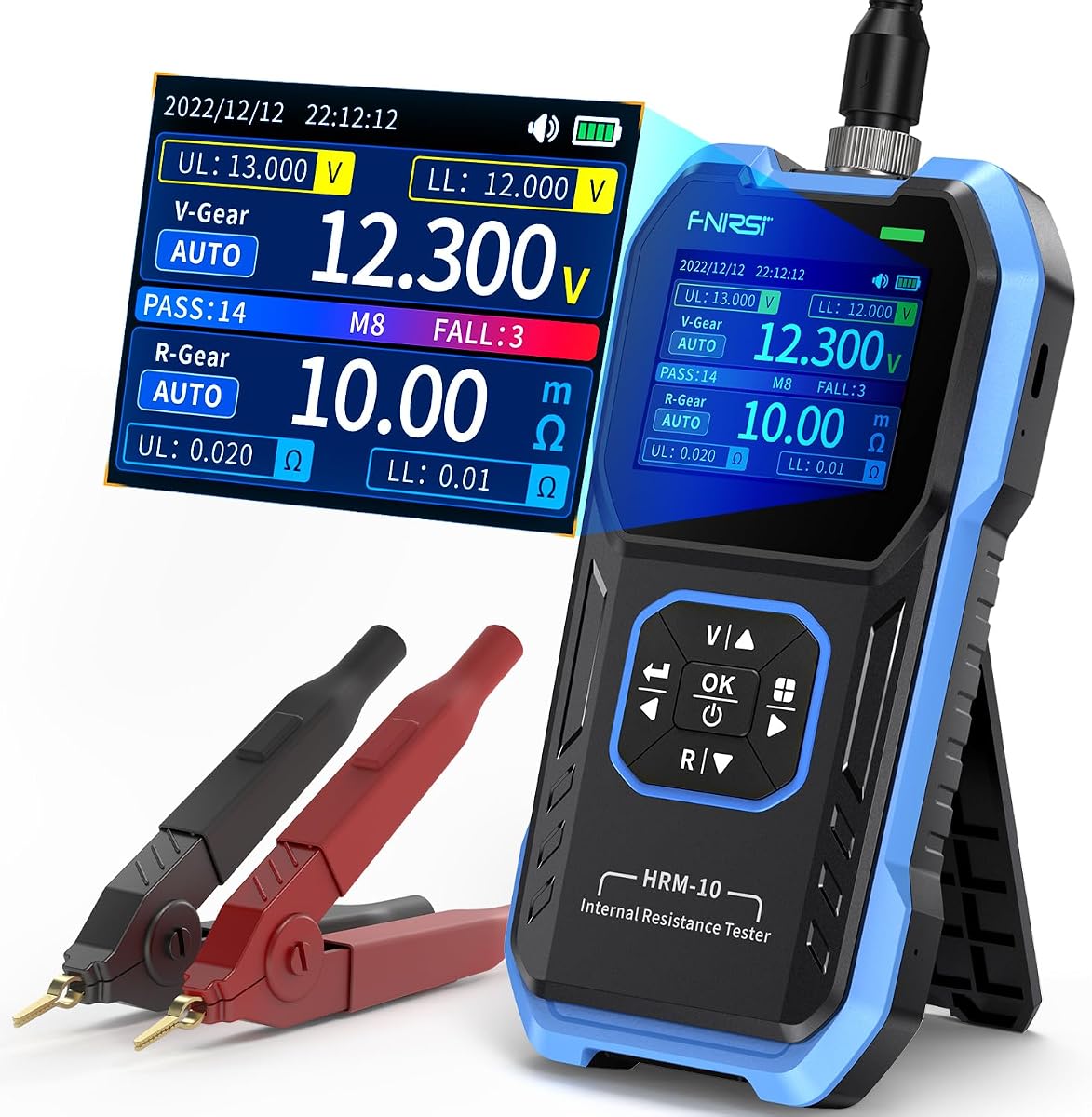
FNIRSI HRM-10
4.4Editor score
Automatic Resistance Testing
TFT HD Color Display
Wide Voltage Range
This guide compares the top Battery Internal Resistance Tester models for accuracy and features to help you choose the right diagnostic tool for your needs.
Finding the right Battery Internal Resistance Tester is crucial for maintaining battery health across various applications. These devices measure internal resistance to determine battery quality and degradation accurately.
We compared ten top-rated models based on measurement precision, display quality, and ease of use. Our analysis covers devices suitable for automotive, household, and professional electronic repair tasks.
Each pick highlights specific strengths like Kelvin sensing or multimeter integration. Please note that availability and pricing may change over time so check current listings before buying.
4.4Editor score

4.5Editor score

5.0Editor score
The following table provides a side-by-side comparison of all ten selected models. It highlights key specifications to help you differentiate between features and choose the most suitable tester.




The ZOYI ZT-XR1 stands out as a top choice for professionals needing both multimeter and resistance testing. It boasts a 25000 count display and True RMS capabilities for accurate readings.
We may earn a commission when you buy through this link, at no additional cost to you.
Its dedicated 4-wire Kelvin test port ensures minimal lead resistance interference. The device supports various battery types from lithium to lead-acid with precise voltage and resistance ranges.
While the price is higher than basic testers, the dual functionality saves cost and space. The rechargeable battery offers solid runtime for daily repair tasks without constant recharging.
This model is ideal for electricians and battery repair technicians. It delivers reliable performance for diagnosing aging batteries and general electronic troubleshooting efficiently.
Combining a multimeter and resistance tester reduces the need for multiple tools in your toolkit.
The 25000 count screen provides clear visibility of even the smallest changes in resistance values.
We may earn a commission when you buy through this link, at no additional cost to you.
The FNIRSI HRM-10 offers exceptional value for users seeking accurate internal resistance data without high costs. Its color display makes reading results straightforward even in varied lighting.
We may earn a commission when you buy through this link, at no additional cost to you.
Using a customized Kelvin four-wire connection, it minimizes wire resistance errors for precise measurements. It supports historical records and data export which aids in tracking battery health over time.
Although it lacks some advanced features of premium models, it covers essential needs for household and automotive batteries. The range up to 100V makes it versatile for many common scenarios.
This tester is perfect for hobbyists or small shop owners. It provides reliable data to determine if batteries need replacement or can continue being used safely.
The HD color technology presents test results more vividly than traditional monochrome displays.
Automatic saving of test records helps you analyze trends without manual note-taking.
We may earn a commission when you buy through this link, at no additional cost to you.
The YR1035+ Digital earns a perfect score for its precision and ease of use. It features a true four-wire testing system that ensures highly accurate internal resistance measurements.
We may earn a commission when you buy through this link, at no additional cost to you.
Its large LCD screen displays real-time voltage and resistance values clearly. This device is perfect for screening batteries across multiple types efficiently in various settings.
While it focuses primarily on resistance testing without multimeter functions, that specialization delivers reliability. The compact design makes it easy to carry for bench or field testing.
Highly recommended for professionals needing top-tier accuracy. It simplifies battery diagnostics with a user-friendly interface and robust measurement capabilities.
The four-wire system eliminates lead resistance interference for true internal resistance values.
Simple operation allows users to get readings quickly without complex setup procedures.
We may earn a commission when you buy through this link, at no additional cost to you.
The Dlyfull Battery Tester is designed for general household battery checks. It supports 11 types including AA, AAA, C, D, and various button cells making it versatile for home use.
We may earn a commission when you buy through this link, at no additional cost to you.
Its rotary dial allows quick selection of the corresponding voltage. The large LCD screen clearly informs you about the battery status so you can decide on replacement needs.
While it detects capacity and internal resistance, it focuses on ease of use rather than professional precision. This makes it suitable for non-technical users managing daily devices.
A practical choice for checking remote controls or flashlights. It helps extend battery life by avoiding overcharging partially full rechargeable batteries.
Supports a wide range of common and button cells for everyday household needs.
No bays required; just select the voltage and connect leads for immediate results.
We may earn a commission when you buy through this link, at no additional cost to you.
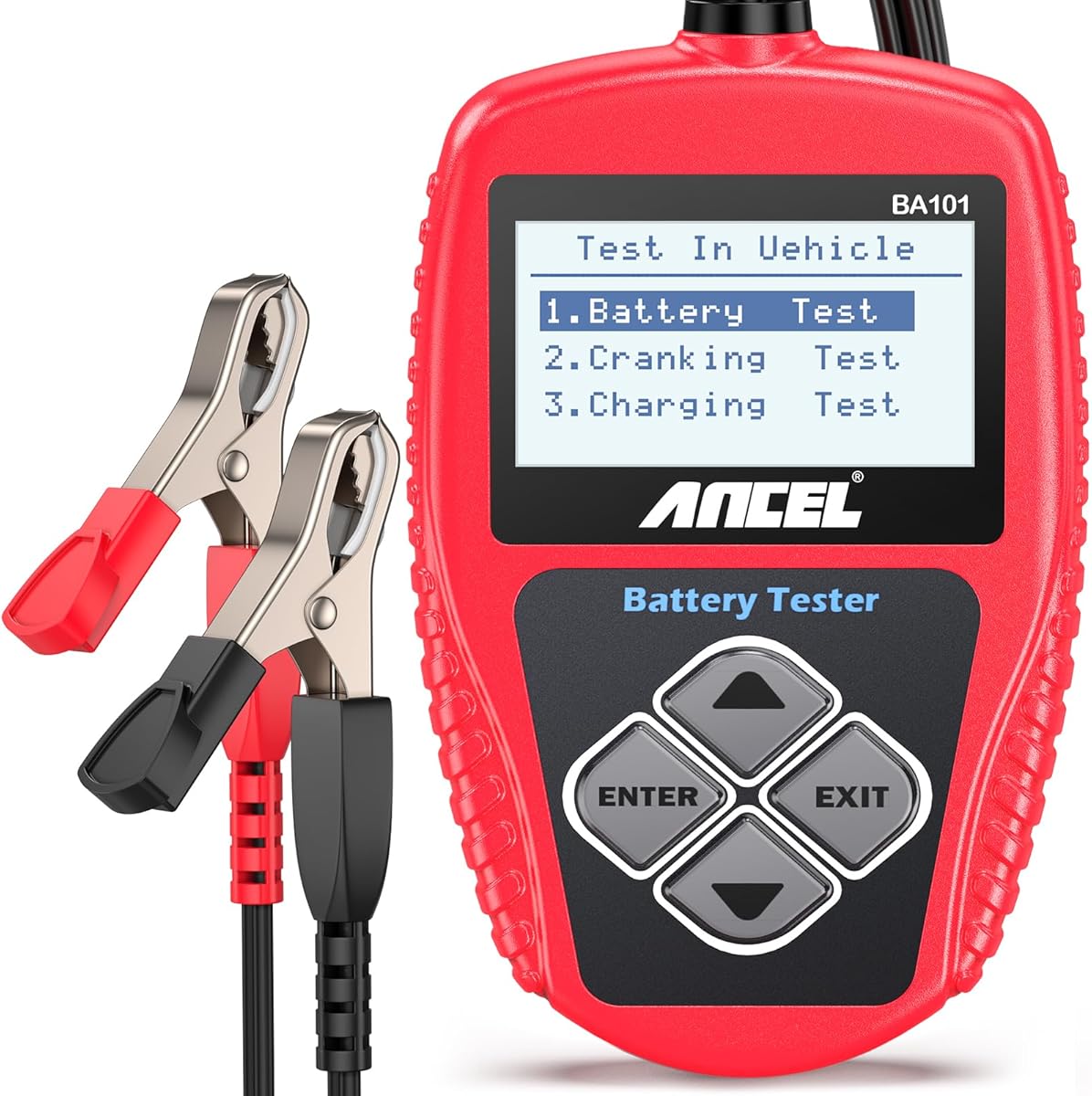
The ANCEL BA101 specializes in automotive 12V battery and charging system diagnostics. It is recommended by popular channels for catching battery problems early before breakdowns occur.
We may earn a commission when you buy through this link, at no additional cost to you.
It provides clear State of Health and Charge readings along with CCA load capacity. The device powers directly from the vehicle battery so no internal power source is needed.
Its black-and-white screen with backlight ensures readability in bright sunlight or low light. Multi-language support and protective features like reverse polarity guard make it user-friendly.
Ideal for truck, boat, and car owners. It simplifies complex diagnostics into easy-to-understand readings to help you maintain vehicle reliability.
Tests charging and cranking systems to prevent unexpected vehicle failures.
Reinforced housing and built-in protection guard against common testing mistakes.
We may earn a commission when you buy through this link, at no additional cost to you.
The ZOYI XR1 combines a battery resistance tester with a 25000-count digital multimeter. It serves as both a quality inspector and maintenance tool for varied electronic work.
We may earn a commission when you buy through this link, at no additional cost to you.
Using Kelvin clips minimizes contact resistance for better accuracy. It supports various functions including capacitance and frequency which adds versatility beyond simple resistance testing.
Although it has a lower rating, it offers robust features like adjustable auto-shutdown and buzzer volume. The TFT screen and Type-C charging reflect modern design choices.
Suitable for hobbyists who want one tool for many jobs. It simplifies battery health checks while providing general electrical measurement capabilities.
Integrates multimeter functions to reduce the need for separate devices.
Adjustable brightness and Type-C port keep it compatible with current tech standards.
We may earn a commission when you buy through this link, at no additional cost to you.
The RC3563 is optimized for scientific and production environments where precision matters. It uses a Kalman filter algorithm to deliver high efficiency and accuracy in resistance measurements.
We may earn a commission when you buy through this link, at no additional cost to you.
Its Kelvin four-wire test clamp avoids contact resistance influence for precise data. This device is widely used in laboratories and battery production for quality assurance.
The built-in battery allows for mobile use with standard 5V charging. It is lightweight and energy-saving making it suitable for frequent field and lab work.
Recommended for researchers or technicians needing reliable scientific data. It ensures accurate assessment of battery health across various chemical compositions.
Intelligent control software provides high precision without bulky hardware.
Lightweight and rechargeable design allows easy transport between test sites.
We may earn a commission when you buy through this link, at no additional cost to you.
The T-685 offers extreme precision with a range down to 1u Ohm. It is an intelligent battery pack analyzer suitable for testing various chemistries including lithium and lead-acid.
We may earn a commission when you buy through this link, at no additional cost to you.
Its ability to measure both AC and DC resistance adds flexibility. The USB port allows computer connectivity for data analysis which is useful for detailed reports.
Despite lower user ratings possibly due to complexity it offers advanced features for professionals. The 6-gear resistance adjustment allows tailored testing for specific battery types.
Best for laboratory settings requiring high accuracy. It serves as a robust tool for verifying battery quality in production or research contexts.
Measures AC and DC resistance to give a complete picture of battery characteristics.
USB port enables easy transfer of test results for further analysis.
We may earn a commission when you buy through this link, at no additional cost to you.
This accessory set complements the YR1035+ system for testing diverse battery types like lithium and button cells. It includes a Kelvin clamp for hands-free operation during testing.
We may earn a commission when you buy through this link, at no additional cost to you.
The voltage range goes up to 100V allowing for versatile applications. It supports various chemistries ensuring you can test different battery models efficiently.
With Type-C charging it fits modern power standards. The perfect rating suggests strong user satisfaction with its utility and ease of use.
Ideal for those expanding their testing kit. It provides the necessary tools for accurate and convenient resistance measurements across multiple battery formats.
Kelvin clamp allows free handling of probes for easier measurement setup.
Type-C port ensures compatibility with current charging cables and standards.
We may earn a commission when you buy through this link, at no additional cost to you.
The WESTOBIG Battery Tester features an upgraded Kelvin four-terminal sensing for precise readings. It allows users to preset up to 8 sets of data to quickly find problematic batteries.
We may earn a commission when you buy through this link, at no additional cost to you.
Its automatic mode simplifies testing by selecting gears automatically or manually. The color HD screen presents results vividly enhancing the measurement experience compared to monochrome units.
Data records are saved and can be transferred to a PC via Excel. This aids in analyzing trends and reporting battery health efficiently over time.
Suitable for automotive and universal battery testing needs. It balances advanced data features with user-friendly operation for various users.
Preset function helps identify batteries failing specific standards quickly.
Advanced color technology improves readability of test results on the screen.
We may earn a commission when you buy through this link, at no additional cost to you.
Selecting the right tester depends on your specific needs and the types of batteries you handle. Understanding key factors will help you find a device that delivers accuracy and durability.
Precision is critical for determining battery health accurately. Look for devices with Kelvin four-wire sensing to minimize lead and contact resistance errors.
Higher precision ensures reliable data for critical applications like automotive or research.
Check the voltage range supported by the device. Most models cover up to 100V which suits household and car batteries effectively.
Ensure the resistance range includes low values like milliohms for modern lithium batteries.
A clear display is essential for reading results in varied lighting. TFT color displays provide better visibility than basic monochrome screens.
Adjustable brightness helps maintain clarity in bright sunlight or dark environments.
Different testers support specific chemistries. Confirm the device works with the batteries you frequently test like lead-acid or lithium-ion.
Universal testers save costs by reducing the need for multiple specialized devices.
Historical records help track battery degradation over time. Devices with data export options allow detailed analysis via computer software.
This feature is valuable for professionals who need to document battery health.
Portable devices often use rechargeable batteries. Long runtime ensures uninterrupted testing during field work or long sessions.
Some models draw power from the test battery which eliminates internal power needs.
Durability matters for tools used frequently. Look for reinforced housing and safety ratings to protect both the device and user.
Good build quality extends the lifespan of your investment significantly.
User-friendly interfaces simplify testing for everyone. Features like auto mode or preset functions reduce manual entry steps.
Intuitive controls make accurate testing accessible even for non-experts.
Before testing, ensure your device is fully charged or powered correctly. Check that the test leads are clean and free from damage to maintain accuracy.
Connect the probes securely to the battery terminals using the correct mode. For best results use Kelvin clips to minimize external resistance interference.
After use, store the device in a dry place. Regular calibration and cleaning of contacts help maintain reliable performance over time.
Internal resistance measures how much a battery opposes current flow. High resistance indicates aging or damage reducing efficiency. Monitoring it helps prevent unexpected failures in your devices.
Testing frequency depends on usage and type. For critical systems like cars test every few months. For household batteries check before use if they have been stored.
Most testers support common types like lithium and lead-acid. However check the specifications for specialized chemistries. Some devices may exclude high-voltage industrial batteries.
Kelvin four-wire sensing uses separate pairs for current and voltage. This eliminates lead resistance errors. It ensures precise readings especially for low resistance values.
High-precision models often include self-calibration features. Regular calibration maintains accuracy over time. Refer to the user manual for recommended intervals.
Some models offer USB or data export for PC connection. This enables trend analysis and reporting. Check the product specs to confirm connectivity options.
The ZOYI ZT-XR1 leads for professional accuracy while the FNIRSI HRM-10 offers great budget value. Both deliver reliable performance for diverse battery testing needs effectively.
Prioritize measurement precision and compatibility with your specific batteries. A device that matches your usage ensures better long-term investment satisfaction.
Always verify current availability and features before purchase. These tools help maintain safety and efficiency across all your battery-powered equipment.