
2Pcs Nano V3.0 Board
4.5Editor score
ATmega328P CH340G chip
USB-C power support
14 digital I/O pins
This guide compares the top ten Arduino Nano Board models for makers and professionals to help you choose the right microcontroller for your specific project
The Arduino Nano Board remains a cornerstone for embedded projects needing compact size and reliable performance. Makers appreciate its versatility across robotics, home automation, and sensor networks. Selecting the right variant ensures your designs run smoothly without compatibility headaches or power issues during development.
We evaluated ten current models based on microcontroller specs, connectivity options, and build quality. Our analysis covers classic ATmega328P versions, newer Every and R4 variants, and Wi-Fi capable ESP32 options. Each product offers distinct advantages for different budgets and technical requirements in today's maker ecosystem.
Every pick highlights key strengths like USB-C support, header options, and processor efficiency. While prices fluctuate daily, our focus stays on value and capability for long-term use. Check current listings before buying to ensure you get the best deal on your chosen Nano variant today.
4.5Editor score
4.6Editor score

4.5Editor score
This side-by-side comparison highlights critical differences in microcontroller power, memory, and connectivity across all ten featured Nano boards to help you match hardware capabilities with your project requirements.


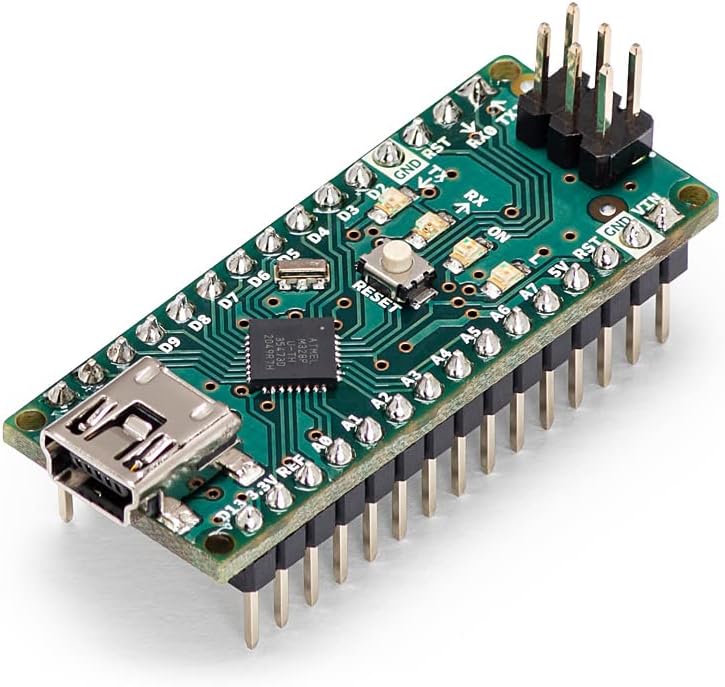
This official Arduino Nano represents the gold standard for compact microcontrollers with strong community support. It scores highly across stability benchmarks and offers precise control over multiple components without sacrificing functionality. The built-in Mini-USB port simplifies programming while maintaining broad compatibility with existing shields.
We may earn a commission when you buy through this link, at no additional cost to you.
Its versatility shines in robotics and automation where precise control over sensors and motors is essential. The board includes 14 digital I/O pins and 8 analog inputs, providing flexibility for complex projects. Programming is straightforward via Arduino IDE, supported by vast libraries and community resources for rapid development cycles.
The Mini-USB interface is less common in modern electronics compared to USB-C, which may require specific cables for newer computers. Despite this limitation, the reliability and official support make it worth the trade-off for critical applications where stability outweighs convenience factors during prototyping stages.
Beginners and professionals alike should consider this model when project longevity and official documentation matter most. Its seamless integration with IoT applications and embedded systems ensures your work remains maintainable for years. Choose this board when you need guaranteed compatibility and extensive community backing for your design.
Perfect for makers and engineers needing reliable connectivity for smart devices and automation tasks without compromising size or performance during development cycles.
Equipped with numerous pins for LEDs, displays, and motors, allowing complex interactions in confined spaces typical of wearables or portable electronics.
We may earn a commission when you buy through this link, at no additional cost to you.
The LAFVIN Nano V3.0 delivers exceptional value through a three-pack bundle ideal for bulk prototyping or classroom use. It mirrors original Nano functionality closely using CH340G chips, which streamline programming across Windows, Mac, and Linux. This makes it accessible for beginners while retaining full IDE compatibility for advanced tasks.
We may earn a commission when you buy through this link, at no additional cost to you.
Its compact form factor fits easily into tight spaces, making it perfect for wearable or embedded projects requiring minimal footprint. The board supports both USB and ISP downloads, offering flexibility for production environments. Stability is strong during routine operations, ensuring consistent performance for sensors and displays in daily use.
As a third-party clone, it may occasionally require driver adjustments when serial ports are not recognized on certain systems. Users might need to install CH340 drivers manually if the device does not appear immediately upon connection. This minor hurdle is offset by the low cost and high availability for hobbyist projects.
Choose this option when you need multiple boards without breaking your budget or require reliable replacements for existing designs. It works seamlessly with most shields and components, providing a practical bridge between official products and cost-conscious experimentation. Ideal for schools, makers, and small startups testing multiple configurations simultaneously.
Designed to fit standard breadboards without additional headers, simplifying circuit assembly and reducing clutter during iterative development phases.
Replaces older USB-to-serial chips with updated drivers, enhancing stability and reducing connection issues common in earlier clone generations.
We may earn a commission when you buy through this link, at no additional cost to you.
The Arduino Nano R4 elevates performance with its Renesas RA4M1 microcontroller and increased memory capacity. Pre-soldered headers allow immediate use without assembly, while the onboard programmable RGB LED aids debugging. Qwiic connectivity simplifies sensor integration, making it ideal for advanced embedded projects needing robust processing power.
We may earn a commission when you buy through this link, at no additional cost to you.
Its 48MHz clock speed and 32KB RAM support complex data handling beyond classic Nano limits. This enables real-time applications like voice recognition or sophisticated logic without external components. The tiny 4.3×1.7cm footprint suits custom PCBs where space constraints demand maximum functionality in minimal area during manufacturing.
Users accustomed to older ATmega chips may find the new architecture requires adjusting coding practices or using specific IDE settings. The higher price point reflects advanced capabilities not needed for simple blink tests or basic sensor reading tasks. Consider your project complexity before investing in this upgrade over traditional models.
Choose this board when you need reliable, fast processing for professional or production-grade embedded systems. Its seamless compatibility with existing shields ensures smooth transitions while delivering better efficiency. Ideal for engineers pushing limits in IoT, robotics, or automation where performance and expandability are critical priorities.
Streamlines connection to sensors and peripherals without custom wiring, reducing errors and saving time during prototyping phases.
Provides visual feedback for debugging or user interaction directly on the board without extra components or complex setup.
We may earn a commission when you buy through this link, at no additional cost to you.
ELEGOO delivers practical value with a USB-C equipped Nano pack that includes ready-to-use headers and cables. The presoldered headers save time and reduce soldering errors for users preferring instant deployment. This setup bridges the gap between modern connector standards and traditional AVR performance effectively for current projects.
We may earn a commission when you buy through this link, at no additional cost to you.
Its familiar 16MHz clock speed ensures compatibility with existing sketches designed for legacy Nano boards. USB-C support provides reliable power and data transfer, reducing frustration with proprietary cables. The bundle is ideal for prototyping multiple nodes or educational labs requiring standardized interfaces without additional setup steps.
It retains the limitations of classic Nano chips, lacking modern wireless features or advanced memory found in newer variants. For projects needing Bluetooth or Wi-Fi, separate modules would be required increasing complexity. This matters when planning scalable or standalone IoT applications beyond local wired interactions with PCs.
Buy this set when you need plug-and-play boards for classroom or quick prototyping scenarios without extra assembly work. It offers consistent performance at a competitive price, making it accessible for beginners. Prioritize this if USB-C convenience outweighs the need for wireless connectivity in your immediate design goals.
Simplifies power and data transfer with reversible connectors, matching current laptop and phone standards without adapters.
Allows immediate connection to breadboards or modules without soldering, speeding up development and reducing setup time.
We may earn a commission when you buy through this link, at no additional cost to you.
Arduino Nano Every upgrades the classic design with powerful ATmega4809 microcontroller providing double the memory. Its 6KB SRAM and 48KB Flash enable more complex code execution without external chips. USB-C support ensures modern connectivity while retaining compatibility with established IDE workflows for smoother development cycles.
We may earn a commission when you buy through this link, at no additional cost to you.
The board offers 20 digital I/O pins, expanding options for multi-sensor or motor control applications. Efficiency improvements reduce power draw in battery-powered projects compared to older ATmega328P versions. This makes it a solid choice for wearables or remote sensors needing longer operation between charges or battery replacements.
Its form factor is slightly larger, which may challenge tight space constraints in existing enclosures. Community libraries remain fewer compared to the vast ecosystem for original Nano boards, requiring some code adaptation. Users should verify compatibility with specialized modules before committing to this board for legacy systems.
Choose this board when you need better performance without leaving the Arduino ecosystem entirely. It provides a cost-effective bridge for projects outgrowing classic capabilities while keeping development simple. Ideal for embedded systems needing enhanced data handling, faster execution, and modern connectivity standards for future-proofing.
Supports larger programs and more variables without external memory, enabling sophisticated logic in compact embedded applications.
Delivers lower power draw for battery-operated devices, extending runtime and reducing maintenance for remote or portable projects.
We may earn a commission when you buy through this link, at no additional cost to you.
This ESP32-S3 powered board introduces wireless capabilities and dual-core processing in a Nano-sized package. It supports Wi-Fi and Bluetooth 5.0 for seamless IoT integration with cloud services or local networks. USB-C allows faster programming and stable power delivery, making it ideal for connected devices needing robust data throughput.
We may earn a commission when you buy through this link, at no additional cost to you.
Its HID support enables creating custom input devices like keyboards or mice without extra hardware. MicroPython compatibility offers a streamlined development experience for users preferring Python over C/C++. This lowers barriers for educators and rapid prototypers focusing on logic rather than low-level implementation details.
Users transitioning from classic Nano will find the architecture and toolchain distinctly different, requiring code adaptation. Wireless features increase power consumption, impacting battery life unless managed with sleep modes. Consider your power budget carefully when planning for always-on or long-duration deployments in remote locations.
Select this board when IoT connectivity and Python programming are top priorities for your project. It excels in smart home systems, wearable tech, or remote sensing applications needing reliable wireless links. Perfect for developers ready to adopt modern connectivity and simplified coding environments for rapid innovation.
Eliminates need for separate Wi-Fi modules, streamlining design and reducing points of failure in connected devices.
Allows coding in Python for faster iteration and easier learning curve, ideal for educators and beginners.
We may earn a commission when you buy through this link, at no additional cost to you.
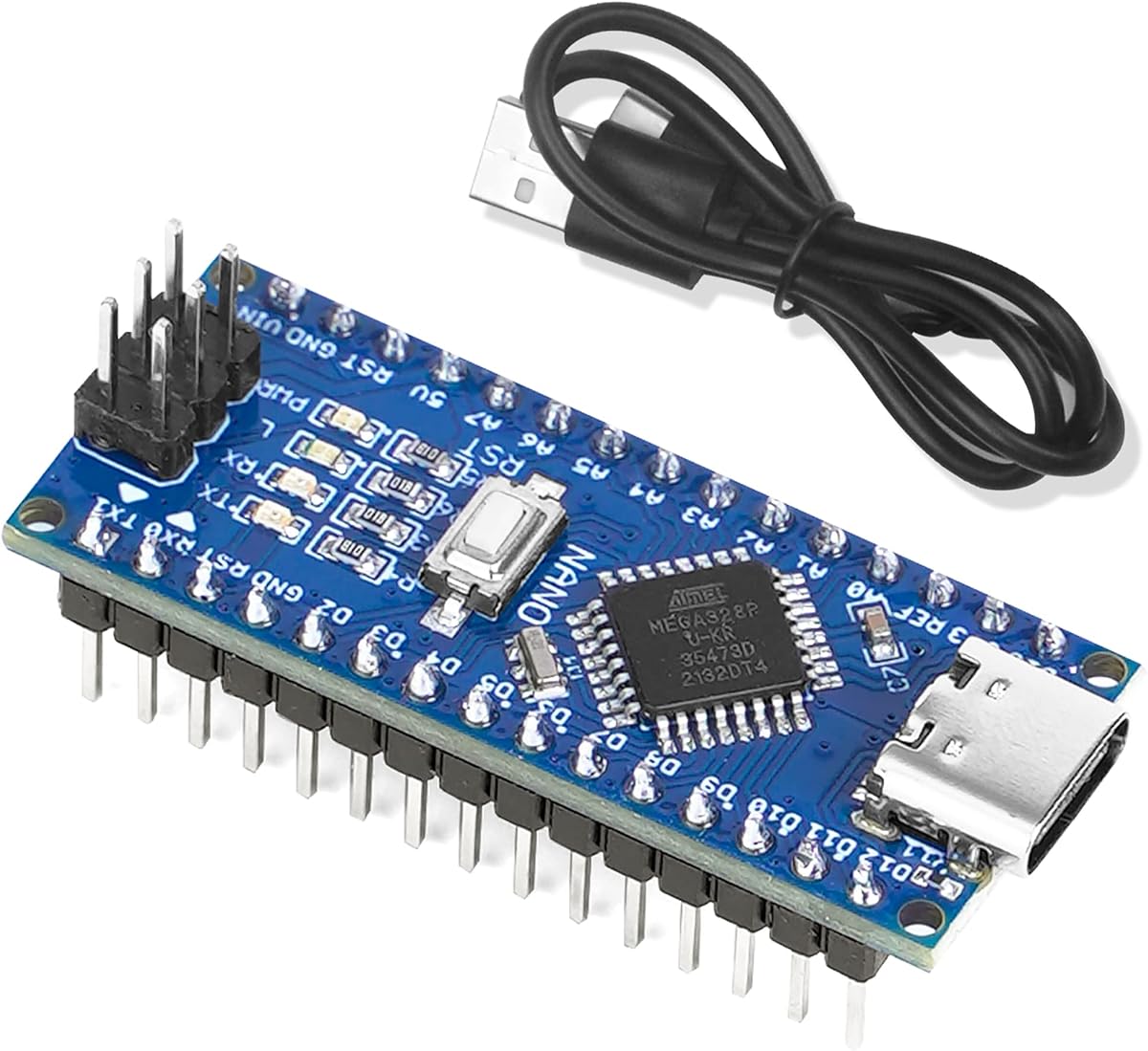
This bundle offers two USB-C equipped Nano clones with included cables for immediate prototyping. The CH340G chip ensures broad operating system compatibility while maintaining classic Nano functionality. Users save money while upgrading to reversible connectors without sacrificing core performance or IDE compatibility for learning or small projects.
We may earn a commission when you buy through this link, at no additional cost to you.
Flexible power options allow USB-C, external 5V regulated sources, or 6-12V unregulated inputs with automatic switching. This convenience simplifies testing environments where multiple power sources might be available. Compact dimensions ensure easy integration into breadboards and enclosures without requiring additional adapters or breakout boards.
As non-official products, quality control can vary, potentially affecting long-term reliability under heavy load. Included cables may not meet high durability standards for frequent plugging or industrial environments. This is acceptable for hobbyist use but may warrant checking user feedback before large-scale deployment in critical systems.
Choose this option for cost-effective classroom sets or personal projects needing modern connectivity without premium pricing. It bridges the gap between legacy designs and current standards, offering practical value. Ideal for beginners upgrading from Mini-USB models who want hassle-free setup and multiple boards for experimentation.
Provides reversible connection and wider availability, reducing cable clutter and improving portability for mobile setups.
Allows switching between USB and external power without manual jumpers, simplifying prototyping and testing workflows.
We may earn a commission when you buy through this link, at no additional cost to you.
This three-pack delivers maximum value for prototyping labs needing multiple nodes or replacement boards quickly. Each board features USB-C connectivity and classic ATmega328P performance, ensuring compatibility with established codebases. Automatic power detection simplifies wiring when switching between USB and external supplies during development or deployment phases.
We may earn a commission when you buy through this link, at no additional cost to you.
Six PWM outputs allow precise motor control or LED dimming across multiple channels without complex software. Compact design fits standard breadboards and small enclosures, saving space in multi-component projects. This makes it ideal for distributed sensor networks or robotics requiring coordinated control through several microcontrollers simultaneously.
Clones lack official warranty and may have inconsistencies in component quality or documentation accuracy. Users should test boards before deployment to ensure consistent performance across the set. This is a minor trade-off for the affordability and convenience, especially when budget constraints are primary concerns for bulk purchases.
Buy this set for schools, makerspaces, or startups needing reliable microcontrollers at minimal cost. It supports large-scale prototyping or IoT deployments where individual node price matters. Prioritize this option when quantity and modern connectivity outweigh official branding or long-term warranty needs.
Simplifies wiring by automatically selecting the higher voltage source, reducing manual jumper selection and configuration errors.
Enables precise speed or brightness control for motors and LEDs, facilitating complex interactions in robotics or home automation.
We may earn a commission when you buy through this link, at no additional cost to you.
The unmounted R4 variant is designed for integration into custom PCBs via castellated edges and loose headers. This approach enables direct mounting without bulky connectors, saving space in embedded production designs. It retains all advanced features of the standard R4 including Qwiic connectivity and programmable LED for debugging support.
We may earn a commission when you buy through this link, at no additional cost to you.
Its Renesas RA4M1 microcontroller ensures high performance and efficiency, suitable for demanding industrial or commercial applications. Castellated edges simplify soldering on custom boards, making it ideal for mass production. Flexible integration options allow users to choose between breadboard prototyping or permanent embedding based on project phase requirements.
Users must solder headers or use castellated edges themselves, which demands additional skills and equipment. This adds complexity compared to pre-soldered models, possibly limiting accessibility for beginners. Soldering quality affects connection reliability, so careful attention is required during assembly to ensure consistent performance across units.
Choose this board when designing custom electronics requiring compact integration and professional assembly. It offers performance benefits for embedded products needing space efficiency and secure mounting. Ideal for engineers planning to transition from prototyping to production with direct PCB mounting capabilities in mind.
Allows direct soldering onto custom boards without headers, creating compact and reliable connections for production devices.
Provides both loose pins for breadboarding and direct soldering points, supporting diverse project workflows and scales.
We may earn a commission when you buy through this link, at no additional cost to you.
This single USB-C Nano module provides essential microcontroller functionality at a budget-friendly price. It uses CH340 chipsets for broad OS compatibility while retaining classic Nano pinouts and IDE support. Auto power switching between USB and external sources removes manual jumper selection, simplifying power management during prototyping.
We may earn a commission when you buy through this link, at no additional cost to you.
Its compact design fits most breadboards and enclosures, making it suitable for space-limited wearable or portable projects. USB-C support reduces cable clutter and aligns with modern devices for easy connection. This makes it accessible for learners or professionals needing one board for testing or small custom builds.
As a clone, build quality may vary between batches affecting long-term reliability under demanding conditions. It lacks official documentation and support, requiring reliance on community resources for troubleshooting. This is acceptable for hobbyist use but might not suit mission-critical applications requiring guaranteed consistency or support.
Select this unit when you need a simple USB-C option for personal or experimental projects without bundles. It delivers reliable performance for standard tasks at minimal cost, ensuring flexibility. Ideal for beginners entering the Arduino ecosystem who value modern connectivity without spending on premium boards.
Modern reversible port simplifies connections and aligns with current tech standards for convenient prototyping.
Automatically selects the highest voltage input, reducing manual configuration and enabling smoother power transitions.
We may earn a commission when you buy through this link, at no additional cost to you.
Choosing the right Nano board depends on balancing processor capabilities, connectivity standards, and project complexity to ensure long-term usability and value for your specific needs.
Different Nano boards use varying microcontrollers like ATmega328P, ATmega4809, or ESP32-S3, affecting speed and memory capacity. Higher clock speeds and more RAM enable complex code execution and advanced data handling required for modern IoT or robotics applications. Consider your program size and computational needs when selecting a board to avoid bottlenecks during execution. Performance should match your project complexity rather than defaulting to legacy specifications blindly.
Prioritize higher-end chips for demanding tasks but stick with classic options for simple control loops to save budget and simplify compatibility with existing code.
USB type matters significantly for long-term usability since Mini-USB is becoming obsolete while USB-C is widely supported by modern computers. Boards with USB-C reduce cable clutter and simplify power delivery, especially when integrating with laptops or mobile devices. Wireless options like Wi-Fi and Bluetooth expand project possibilities but increase power consumption and require additional configuration steps during setup. Evaluate your connection environment before deciding on wired versus wireless implementations.
Opt for USB-C for modern devices and add wireless capabilities only when remote communication is essential to your project goals.
Pre-soldered headers save time and effort during initial setup, while loose headers offer flexibility for custom PCB designs requiring direct mounting. Consider your technical comfort level with soldering when choosing between these options to avoid unnecessary frustration or additional tool costs. Pre-mounted headers are ideal for quick prototyping whereas castellated edges enable space-efficient production integration for finished products. Match this decision to your production scale and skill set before purchasing.
Choose pre-soldered boards for rapid prototyping or loose headers only if you have custom PCB requirements and soldering expertise.
Different boards support varying voltage ranges and automatic power source switching which simplifies wiring during prototyping or deployment phases. Some models offer battery efficiency improvements crucial for wearable or remote sensor applications where runtime impacts usability significantly. Check power input compatibility with your intended power supplies to avoid overvoltage risks or unstable operation during extended use. Reliable power handling ensures consistent performance across diverse operating conditions without additional components.
Select boards with automatic voltage switching and low-power modes if battery life and ease of power management are critical priorities.
Official Arduino boards provide extensive documentation, community libraries, and reliable software support that reduces development time and troubleshooting needs. Third-party clones offer cost savings but may require manual driver installation and lack guaranteed long-term support or consistent build quality. If you rely on existing projects or need broad community resources, official boards ensure smoother development cycles with less friction. Balance budget constraints against support needs when choosing between original and cloned options.
Stick with official boards for critical projects needing maximum support or use clones when cost savings outweigh reliability concerns.
Bulk bundles are economical for classrooms or multi-node deployments whereas single units suit individual prototypes or specialized applications better. Consider how many boards you need now versus potential future scaling to avoid frequent reordering or inconsistent batches later. Larger sets reduce per-unit costs significantly but may include unwanted extras if your project requires only one or two units initially. Align purchase volume with your expected project growth and replacement needs.
Choose bundles for bulk prototyping and single units for individual needs to match your current project scale accurately.
Boards with Qwiic connectors or additional I/O ports simplify adding sensors or displays without custom wiring complexity. Evaluate required peripheral count before selecting to ensure sufficient pins for your envisioned components and connections. Some boards offer built-in features like RGB LEDs that reduce external component needs and simplify debugging workflows directly on the device. Planning ahead for expansion prevents redesigns when requirements grow beyond initial board capacity.
Prioritize boards with extra pins or specialized connectors if your project involves complex peripherals or future expansion needs.
Modern processors and communication standards protect your investment from quick obsolescence as software and hardware evolve over time. Boards supporting newer protocols like USB-C or advanced wireless ensure compatibility with upcoming tools and systems you may adopt later. Consider long-term usability when choosing between legacy and modern variants to reduce future upgrade costs and migration effort. Balance immediate needs against anticipated technology shifts for sustainable project development.
Choose boards with modern connectors and upgradable firmware to extend usability as technology evolves beyond current standards.
Install the Arduino IDE and select the correct board model in Tools to ensure proper driver recognition and code upload. For clones with CH340 chips, download and install the appropriate drivers if serial ports do not appear automatically after connection. This initial setup is crucial for communication between your computer and board for programming and debugging cycles without errors.
Connect sensors or components through digital and analog pins following voltage requirements to avoid damage during operation. Use appropriate current limiting resistors and voltage regulators for high-power peripherals like motors or displays. Verify wiring connections against schematic diagrams before applying power to prevent short circuits or component failure during testing phases.
Store boards in static-free environments away from moisture to preserve longevity and consistent performance over time. Avoid excessive force when inserting into breadboards or connectors as repeated stress may damage solder points or trace integrity. Regularly back up your code and document hardware configurations for easier troubleshooting and version control across your projects.
The Nano Every uses an ATmega4809 microcontroller with double the memory and faster processing than the classic ATmega328P used in standard Nano. It features USB-C instead of Mini-USB and offers more digital I/O pins while maintaining similar IDE compatibility for easier transitions. These improvements support complex applications requiring more code space and efficient power consumption.
Third-party clones often use CH340 or CP2102 chips that are not natively supported by all operating systems out of the box. Official Arduino boards use different drivers that install automatically with IDE updates while clones may require manual driver download. Check your board's chip specifications and install corresponding drivers if devices do not appear in system device managers.
While suitable for prototyping and hobby projects, industrial use requires boards with proven reliability and warranty coverage like official Arduino models. Consider operating temperature ranges, environmental protection, and long-term support before deploying in critical infrastructure or commercial settings. Some variants like R4 offer enhanced stability for demanding environments but verify specific ratings.
Yes, USB-C provides reversible connectivity, higher power delivery, and wider device compatibility than the legacy Mini-USB standard. It simplifies cabling and future-proofs connections as computers increasingly drop Mini-USB ports entirely. For new projects, USB-C models offer greater convenience without sacrificing core functionality or code compatibility.
The Nano ESP32 is ideal for IoT due to built-in Wi-Fi and Bluetooth support along with dual-core processing capabilities. It connects directly to networks and cloud services without external modules while supporting MicroPython for rapid development. Consider power requirements if deploying battery-powered units and optimize sleep modes accordingly.
Most clones function reliably for learning and prototyping but vary in quality control and component durability over time. Official boards guarantee consistent standards and support whereas clones may require additional testing before deployment. Read user reviews and inspect build quality before bulk purchasing to ensure acceptable reliability levels.
The Nano R4 stands out for advanced embedded projects needing enhanced processing while the classic Nano remains unmatched for compatibility and community support. Budget-conscious buyers will find excellent value in bulk bundles from trusted third-party vendors offering USB-C convenience without breaking the bank. Each option presents distinct trade-offs between price, performance, and connectivity that should align with your project goals and technical needs.
Prioritize official boards when longevity and documentation matter most, but consider clones for rapid prototyping where speed outweighs long-term warranties. Evaluate your specific requirements around memory, connectivity, and physical constraints before making a final decision. This approach ensures you select hardware that supports your creative vision without unexpected limitations or compatibility issues.
Check current pricing and availability before purchasing as offers and stock fluctuate regularly across online retailers. Keep an eye on bundle deals that include necessary accessories like cables or sensors to maximize value. Your ideal Nano board waits to power your next project with the right blend of power and practicality for success.